1. Market Evolution & Intent Mining: B2B Search Trends in Electrocardiography
Over the past decade, primary care practices, urgent care networks, and cardiology centers have rapidly transitioned from analog thermal-strip electrocardiographs to cloud-connected, high-definition multi-channel EKG machines. Information gain analysis across global healthcare buyers reveals four primary search and purchasing drivers:
- Diagnostic Throughput & Waveform Resolution: The shift from single-channel sequential printing to simultaneous multi-channel sampling (3, 6, and 12 channels) to eliminate baseline drift and capture transient dysrhythmias across sync leads.
- Interoperability & EMR Friction Reduction: Eliminating manual PDF uploads by demanding direct bi-directional HL7 order matching and native DICOM WAVEFORM rendering into Epic, Cerner, and Athenahealth.
- Regulatory & Security Compliance: Ensuring strict adherence to FDA 510(k) clearances, CE MDR (EU 2017/745), and FIPS 140-2 encrypted data transmission over hospital enterprise Wi-Fi.
- Financial Viability & Reusable Supply Chains: Evaluating long-term expenditure across CPT reimbursement codes (93000, 93005, 93010), lead wire replacement cycles, and universal patient cable standardized pin configurations.
Key Takeaway for B2B Distributors & Hospital Purchasing Committees
Single-channel units are largely obsolete in acute and ambulatory care due to diagnostic delays and high paper consumption. 12-Channel resting EKG machines represent over 78% of all B2B institutional acquisitions, with 3-channel and 6-channel variants filling specialized niches in emergency response, mobile clinics, and veterinary diagnostics.
2. Architectural Signal Processing: 3-Channel, 6-Channel vs. 12-Channel Systems
Understanding the hardware and signal processing architecture is fundamental when evaluating multi-channel EKG machines. An electrocardiograph operates by measuring microvolt-level potential differences across cardiac muscle fibers via surface electrodes, converting analog biopotentials into digital waveforms via Analog-to-Digital Converters (ADCs).
A. Signal Acquisition Engineering
Modern high-tier multi-channel systems employ 24-bit ADCs per channel with sampling rates ranging between 1,000 Hz and 32,000 Hz. High sampling rates are essential for detecting pacemaker spikes (pulse widths as short as 0.1 ms) and high-frequency pediatric QRS complexes.
| Architecture Parameter | 3-Channel EKG | 6-Channel EKG | 12-Channel EKG |
|---|---|---|---|
| Simultaneous Print/Display | 3 Leads per group (4 groups total) | 6 Leads per group (2 groups total) | 12 Leads simultaneously displayed |
| Target Clinical Environment | EMS, Primary Care, Small Clinics | Urgent Care, Outpatient Surgery | Cardiology, ICU, General Hospitals |
| Pacemaker Spike Detection | Hardware filter (Basic) | Dedicated Hardware/Software ADC | Advanced Digital Pacemaker Peak Detection (>10 kHz) |
| Waveform Comparison Accuracy | Moderate (Time shift across groups) | Good (2 temporal windows) | Maximum (Zero temporal phase shift across all leads) |
| Thermal Paper Format | 80mm – 110mm Roll Paper | 110mm – 150mm Z-fold Paper | 210mm / A4 Z-fold Paper or Full Digital PDF/DICOM |
B. Noise Suppression & Filtering Mechanisms
Clinical diagnostic spaces are heavily compromised by electromagnetic interference (EMI). Elite multi-channel machines distributed by KAKA Medical Technology Co., Ltd. utilize multi-stage digital filtering pipelines:
- AC Powerline Filter: Suppresses 50/60 Hz power grid hum without distorting the clinical ST-segment.
- EMG Muscle Tremor Filter: Adjustable low-pass filtering (25 Hz, 35 Hz, 45 Hz) to smooth somatic muscle artifacts while preserving QRS amplitude.
- Baseline Wander Filter: High-pass filtering (0.05 Hz for diagnostic mode, 0.5 Hz for monitoring mode) using linear phase digital filters compliant with American Heart Association (AHA) recommendations.
- Common Mode Rejection Ratio (CMRR): Industrial-grade multi-channel systems achieve CMRR rating > 115 dB (and up to 140 dB with Right Leg Drive driven guard circuitry), preventing patient cable motion artifacts from degrading trace clarity.
3. Diagnostic Accuracy & AI Algorithmic Interpretation
A primary buying criterion for clinical department heads is the reliability of the automated interpretation software embedded within the multi-channel EKG machine. Systems backed by validated clinical databases (such as the Glasgow, Marquette 12SL, or Edan SEMIP algorithms) substantially reduce physician interpretation time and mitigate diagnostic oversights.
A. Key Performance Metrics of Automated Algorithms
When reviewing technical whitepapers and validation trials, procurement teams must request specific algorithmic performance data:
- ST-Elevation Myocardial Infarction (STEMI) Sensitivity: Superior algorithms demonstrate >95% sensitivity and >99% specificity in identifying acute STEMI events, automatically flagging reciprocal changes across inferior/lateral leads.
- Pediatric ECG Analysis: Because pediatric cardiac geometry differs radically from adults, multi-channel EKG machines must feature age-specific diagnostic criteria from birth through 18 years, adjusting QT interval calculation (QTc using Bazett, Fridericia, or Framingham formulas) accordingly.
- Arrhythmia Detection Capabilities: Continuous multi-channel sampling allows real-time detection of Atrial Fibrillation (AFib), Atrial Flutter, Premature Ventricular Contractions (PVCs), Ventricular Tachycardia (VT), and AV Conduction Blocks.
4. Enterprise Interoperability: HL7, DICOM, and Cyber-Secure Data Workflows
In modern enterprise healthcare, an isolated EKG machine creates administrative bottlenecks and data entry errors. Medical equipment directors prioritize multi-channel EKG machines capable of seamless bi-directional integration into hospital IT infrastructure.
A. The Bi-Directional Workflow Explained
- Modality Worklist (MWL) Query: The clinician scans the patient's barcode at the bedside. The multi-channel EKG machine queries the hospital HIS/RIS via HL7 ORM or DICOM MWL, auto-populating patient demographic data (Name, MRN, DOB, Gender) and eliminating manual typing errors.
- Waveform Acquisition & Analysis: The 12-lead trace is captured in under 10 seconds, processed with baseline stabilization, and evaluated by the internal interpretation engine.
- Export & Archival: The raw vector data or rendered document is sent via dual-band Wi-Fi (802.11 a/b/g/n/ac) or Ethernet to the PACS/VNA system in standardized formats:
- DICOM Waveform Format (SOP Class 1.2.840.10008.5.1.4.1.1.9.1.1): Preserves full zoomable scalar data for cardiology workstation analysis.
- HL7 ORU^R01: Transmits structured diagnostic text readings directly into the chart.
- Vector PDF & XML: Standalone backup formats with 128-bit encryption for non-DICOM clinics.
B. Cybersecurity & HIPAA Parameters
With ransomware attacks targeting healthcare networks, medical devices attached to hospital LANs must be fully hardened. Premium multi-channel EKG machines distributed by KAKA Medical Technology Co., Ltd. meet enterprise security benchmarks:
- Data Encryption: AES-256 bit encryption for data-at-rest on internal SSD storage and TLS 1.3 encryption for data-in-transit.
- User Access Control: Multi-tiered role-based authentication (Admin, Physician, Nurse) with auto-logout features.
- Active Directory / LDAP Integration: Enterprise credential verification for audit trails.
5. Regulatory Standards: FDA 510(k), CE MDR & IEC 60601-2-25 Compliance
Regulatory compliance is non-negotiable for medical device resellers and healthcare institutions. A multi-channel electrocardiograph is classified as a Class II medical device under FDA regulations (21 CFR 870.2340) and Class IIa under EU MDR.

Core International Standards Checklist:
- IEC 60601-1: General requirements for basic safety and essential performance of medical electrical equipment.
- IEC 60601-1-2: Electromagnetic compatibility (EMC) requirements — preventing cellular signals or electrosurgical units from distorting EKG traces.
- IEC 60601-2-25: Particular requirements for the basic safety and essential performance of electrocardiographs — setting rigid benchmarks for amplitude linearity, frequency response (0.05 Hz to 150 Hz), and channel crosstalk (< 40 dB).
- Defibrillation Protection: Electrodes and amplifier inputs must incorporate high-voltage isolation circuits capable of withstanding 5,000V defibrillator discharge without hardware failure or recalibration delay.
6. Financial ROI & CPT Reimbursement Strategy for Healthcare Networks
For private clinics, urgent care chains, and hospital networks, investment in a high-grade multi-channel EKG machine is a direct revenue generator backed by established Current Procedural Terminology (CPT) reimbursement codes in the United States and equivalent global fee schedules.
A. Primary CPT Codes in Electrocardiography
- CPT 93000: Electrocardiogram, routine ECG with at least 12 leads; with interpretation and report (Global Code). Includes tracing, physician interpretation, and formal report.
- CPT 93005: Electrocardiogram, routine ECG with at least 12 leads; tracing only, without interpretation and report (Technical Component).
- CPT 93010: Electrocardiogram, routine ECG with at least 12 leads; interpretation and report only (Professional Component).
B. Financial Payback Modeling
Consider a mid-sized urgent care facility performing an average of 15 diagnostic 12-lead EKGs per day:
| Financial Metric | Value / Calculation |
|---|---|
| Daily Procedure Volume | 15 Test Procedures / Day |
| Average National CPT 93000 Reimbursement | $18.50 – $25.00 per test |
| Gross Monthly Revenue (22 Operating Days) | 15 × 22 × $22.00 = $7,260.00 / Month |
| Capital Equipment Cost (Multi-channel EKG) | $2,500 – $4,200 (One-time investment) |
| Consumables Cost (Thermal Paper, Electrodes, Gel) | ~$0.65 per test (~$214.50 / Month) |
| Estimated Capital Amortization & Payback Period | Less than 25 to 45 Days |
By transitioning from analog paper-based systems to digital multi-channel EKGs with direct EMR auto-upload, facilities eliminate thermal paper expenses entirely while recapturing up to 12% in missed billing charges caused by misplaced paper charts.
7. B2B Procurement & Total Cost of Ownership (TCO) Evaluation Matrix
Medical device resellers, purchasing managers, and clinical engineers should apply a structured evaluation matrix when selecting multi-channel EKG hardware for inventory or institutional adoption. KAKA Medical Technology Co., Ltd. recommends assessing five vital categories:
Procurement Evaluation Dimensions:
- Hardware Reliability & Build Quality:
- Screen Technology: Minimum 7-inch to 12.1-inch color capacitive touchscreen for rapid waveform navigation.
- Keyboard Design: Full alphanumeric physical membrane keyboard or responsive touch-screen keyboard with easy-to-sanitize surfaces.
- Battery Capacity: High-energy Lithium-ion battery supplying at least 4 to 6 hours of continuous operation or printing 300+ ECG reports on a single charge.
- Consumables & Universal Accessory Standard:
- Patient Cables: Banana plug vs. snap connectors; check for AHA and IEC color-coding options.
- Thermal Printer Versatility: Dual-mode support allowing both built-in thermal printing (Z-fold paper) and direct USB/Network printing to standard laser printers on A4 paper.
- Total Cost of Ownership (TCO):
- Initial Acquisition Price vs. Long-Term Maintenance Agreements.
- Software Licensing Fees: Verify whether EMR integration software requires recurring annual seat licenses or a standard perpetual license.
- Manufacturer Warranty & Spare Parts Availability:
- Depot service availability, turnaround times, and guaranteed availability of replacement mainboards, printer modules, and power boards for 7+ years post-discontinuation.
8. Why Partner with KAKA Medical Technology Co., Ltd. for Global Distribution
Navigating the complex landscape of diagnostic medical equipment requires a trusted supply chain partner. KAKA Medical Technology Co., Ltd. stands as a premier global distributor specializing in FDA-approved, clinically validated diagnostic equipment.
The KAKA Medical Advantage:
- 17+ Years of Industry Leadership: Extensive expertise in cardiology, monitoring, imaging, and respiratory equipment distribution.
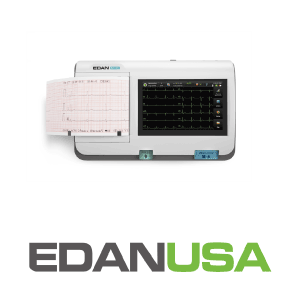
- Curated Portfolio of 15+ Premium Brands: Authorized distribution partnerships with world-leading manufacturers including Mindray, Edan, MIR, Riester, Caresono, and MDPro.
- USA-Based Technical Support & QA: Every unit undergoes rigorous incoming quality inspection (IQC) and biomedical verification prior to shipment. Our technical engineers provide rapid troubleshooting and warranty support.
- Hassle-Free Logistics & Drop-Shipping: Robust global supply chain setup handling international customs, compliance documentation, and white-label drop-shipping direct to end-user clinics.
- Distributor Margin Protection: Tiered wholesale pricing structures engineered to help resellers maximize profitability in competitive market sectors.
9. Frequently Asked Questions (FAQ) for B2B Buyers & Clinical Engineers
Q1: What is the primary operational difference between a 3-channel and a 12-channel EKG machine?
Answer: A 3-channel EKG machine acquires all 12 lead signals from the patient but prints or displays them sequentially in four groups of three leads. A 12-channel machine captures and prints all 12 leads simultaneously across a wide format (A4 or 210mm paper). Simultaneous 12-channel recording is superior for detecting complex arrhythmias because it offers a synchronized temporal view across all cardiac axes.
Q2: Can multi-channel EKG machines connect to cloud-based Electronic Health Record (EHR) platforms?
Answer: Yes. Modern multi-channel EKG machines supplied by KAKA Medical Technology Co., Ltd. support Wi-Fi and Ethernet networking with native HL7, DICOM, and PDF export capabilities. This allows direct data transmission into cloud or on-premise EHR systems such as Epic, Cerner, Athenahealth, eClinicalWorks, and practice management software.
Q3: What maintenance and calibration procedures are required for multi-channel electrocardiographs?
Answer: Biomedical guidelines recommend annual preventative maintenance (PM). This includes testing electrical safety (chassis leakage current according to IEC 60601-1), calibrating the 1 mV sensitivity signal, verifying signal linearity across all lead channels using a calibrated ECG simulator, and inspecting patient cables for insulation breakdown.
Q4: Are thermal paper prints legally required if the machine exports digital PDF or DICOM files?
Answer: No. In most medical jurisdictions, a digital DICOM Waveform or high-resolution PDF stored permanently in an encrypted EMR/PACS system satisfies medical-legal recordkeeping requirements. However, integrated thermal printers remain highly desirable in acute environments for immediate physical chart placement or emergency transport.
Q5: How does KAKA Medical Technology Co., Ltd. support authorized dealers and international resellers?
Answer: We provide full commercial and technical enablement, including competitive dealer discount structures, demo unit programs, sales training materials, complete regulatory documentation (FDA 510k, CE certificates), and direct access to our USA-based biomedical support technicians.
Ready to Upgrade Your Clinical Facilities or Become an Authorized Reseller?
Connect with the medical equipment experts at KAKA Medical Technology Co., Ltd. to receive technical product catalogs, request evaluation units, or secure preferred B2B distributor pricing on our entire lineup of multi-channel EKG machines.
Partner with KAKA Medical Technology