Executive Summary & Information Gain Highlights
This technical whitepaper provides healthcare procurement officers, hospital biomedical departments, and medical device distributors with an expert-level evaluation framework for modern Fetal Monitors (Cardiotocography / CTG Systems). From signal processing physics to HL7 middleware integration, this guide delivers empirical decision criteria for acquiring FDA-cleared and CE-certified antepartum and intrapartum monitoring infrastructure.
In modern obstetrics, real-time maternal-fetal assessment represents one of the most critical clinical control points. Cardiotocography (CTG)—the continuous, simultaneous recording of fetal heart rate (FHR) and maternal uterine contractions (TOCO)—has evolved from analogue paper tracing to sophisticated digital signal processing (DSP) platforms. For healthcare procurement committees and global equipment distributors, evaluating modern fetal monitors requires navigating complex technical parameters: Doppler acoustic power output, signal autocorrelation performance, cross-channel verification (CCV) algorithms, wireless telemetry latency, and seamless EHR interoperability.
At KAKA Medical Technology Co., Ltd., our 17+ years of experience bridging tier-one diagnostic equipment manufacturers with global healthcare systems has demonstrated that procurement failure rarely stems from missing basic functionality. Instead, long-term clinical dissatisfaction and financial risk arise from unvetted total cost of ownership (TCO), probe failure rates under intensive chemical disinfection, software licensing lock-in, and maternal-fetal heart rate confusion during active labor.
1. Architectural Classification: Antepartum vs. Intrapartum CTG Systems
When structuring a B2B RFQ (Request for Quotation) or evaluating distributor inventories, healthcare buyers must first categorize fetal monitoring platforms based on clinical intended use. Fetal monitors are broadly divided into three architectural classes:
1.1 Antepartum Non-Stress Test (NST) Systems
Designed primarily for outpatient OB/GYN clinics, maternal-fetal medicine (MFM) offices, and antepartum triage units. These monitors evaluate fetal well-being in pregnancies beyond 24–28 weeks of gestation where active labor is absent.
- Primary Parameter Sets: Single FHR (pulsed-wave ultrasound), external TOCO (strain-gauge pressure transducer), and manual/automatic fetal movement detection (AFMD).
- Clinical Focus: Baseline FHR determination, acceleration detection, and computerized NST analysis (e.g., modified Dawes-Redman criteria).
- Form Factor: Compact desktop units (7 to 10-inch displays) with built-in thermal recorders and optional battery backup.
1.2 Intrapartum Labor & Delivery (L&D) High-Acuity Monitors
Engineered for high-risk labor units, operating suites, and delivery wards where continuous monitoring under physiological stress is required.
- Advanced Parameter Sets: Dual FHR (twin monitoring), Direct ECG (DECG / Fetal Scalp Electrode - FSE), Intrauterine Pressure Catheter (IUPC), and integrated Maternal Vital Signs (Maternal ECG, NIBP, SpO₂, Temperature).
- Clinical Focus: High-fidelity deceleration pattern classification (early, late, variable, prolonged), baseline variability assessment, and intrauterine contraction intensity measurement (in mmHg or KPa).
- Form Factor: Large-format bedside terminals (12 to 15.6-inch high-resolution color touchscreens) with swivel mounts, central telemetry pairing, and dual paper/paperless archiving capability.
1.3 Telemetric & Ambulatory Maternal-Fetal Monitors
Representing the modern standard of care in progressive obstetric wards, wireless telemetry systems untether laboring mothers from bedside consoles, encouraging mobility and hydrotherapy during early labor.
Featured Platform: High-Acuity Fetal & Maternal Monitor
Distributed worldwide by KAKA Medical Technology Co., Ltd., featured CTG units combine high-sensitivity 1.0 MHz 9-crystal ultrasound transducers, waterproof IPX8 construction, and integrated wireless telemetry interfaces for complete clinical flexibility.
Request Technical Datasheet2. Transducer Engineering Physics & Signal Processing
The clinical efficacy of any cardiotocograph is fundamentally limited by the physical fidelity of its acoustic and mechanical sensors. Procurement teams must scrutinize the underlying transducer specifications rather than relying solely on screen display features.
2.1 Ultrasound Doppler Transducer Architecture
Modern fetal Doppler probes utilize multi-crystal piezoelectric elements operating at acoustic frequencies between 1.0 MHz and 2.0 MHz. KAKA Medical Technology Co., Ltd. recommends 1.0 MHz ultra-wideband 9-crystal transducers for clinical procurement due to critical physical advantages:
- Acoustic Penetration & Beam Coverage: Lower acoustic frequencies (1.0 MHz) experience reduced tissue attenuation, enabling deeper penetration in high-BMI (Body Mass Index) maternal patients. Wide-beam 9-crystal geometry maintains signal lock on the fetal heart during maternal repositioning or fetal shift, significantly reducing trace loss.
- Acoustic Power Safety (IEC 60601-2-37): Transducer spatial-peak temporal-average intensity ($I_{spta}$) must strictly comply with FDA limits ($I_{spta} < 94 \text{ mW/cm}^2$) to eliminate thermal and mechanical index risks to delicate fetal tissues.
2.2 Digital Autocorrelation Algorithms & Anti-Artifact Processing
Fetal heart sounds recorded via Doppler ultrasound are plagued by acoustic noise, maternal bowel sounds, and placental blood flow artifacts. High-performance CTG units employ advanced Digital Signal Processing (DSP) utilizing cross-correlation functions:
$$R_{xy}(\tau) = \lim_{T \to \infty} \frac{1}{T} \int_{0}^{T} x(t) y(t + \tau) dt$$
By continually comparing shifted frames of incoming acoustic signals, autocorrelation algorithms isolate true periodic cardiac impulses from random background noise, delivering beat-to-beat FHR calculation accuracy within $\pm 1 \text{ bpm}$.
2.3 Maternal Heart Rate (MHR) Overlap & Cross-Channel Verification (CCV)
One of the greatest clinical hazards in intrapartum monitoring is the accidental recording of the maternal heart rate by the fetal Doppler probe—a situation that can mask severe fetal bradycardia. Modern systems supplied by KAKA Medical Technology Co., Ltd. feature hardware-level Cross-Channel Verification (CCV):
Clinical Risk Prevention: CCV continuously cross-compares the acoustic signals from FHR Probe 1, FHR Probe 2 (in twins), and the maternal SpO₂ or MHR ECG lead. If coincidence is detected across channels for more than 15 seconds, visual and audible alerts trigger immediately, prompting clinical repositioning of the transducer.
3. Advanced Software Intelligence & Clinical Decision Support
Beyond raw signal acquisition, modern healthcare institutions require automated analytical tools to support clinical decision-making, mitigate legal exposure, and standardize trace interpretation according to established guidelines (FIGO, ACOG, and NICHD standards).
| Evaluation Parameter | Basic Antepartum CTG | Standard Intrapartum CTG | Premium Enterprise CTG (KAKA Medical Portfolio) |
|---|---|---|---|
| Transducer Array | 1.5 MHz – 2.0 MHz (3 to 6 Crystals) | 1.0 MHz – 1.5 MHz (6 to 9 Crystals) | 1.0 MHz Ultra-Wideband 9-Crystal Array (IPX8 Waterproof) |
| Multi-Fetal Capacity | Single FHR standard | Dual FHR (Twins) | Dual FHR Standard + Triplet Monitoring via Hardware Expansion |
| Signal Processing | Analogue Peak Detection | Standard DSP Autocorrelation | High-Fidelity Multi-Stage DSP + Cross-Channel Verification (CCV) |
| Internal Parameters | Not Supported | DECG (FSE) optional | Full DECG (FSE) & IUPC Interface Integrated |
| Maternal Vitals Integration | None | Basic NIBP & SpO₂ | Full ECG, NIBP, SpO₂, Temperature, Respiration |
| Computerized Analysis | Basic AFMD Tracing | Manual Trace Interpretation | Automated Dawes-Redman & NICHD 3-Tier Diagnostic Engine |
| EHR & Telemetry | RS232 / Serial Print only | LAN / Standard HL7 Export | Bi-directional HL7 v2.8 / DICOM PACS / 433MHz Telemetry / Central Monitoring |
3.1 Computerized Antepartum CTG (Dawes-Redman Criteria)
Computerized CTG (cCTG) replaces subjective visual inspection with quantitative statistical analysis. Developed from databases of tens of thousands of pregnancies, the Dawes-Redman algorithm evaluates 60-second windows of fetal heart rate data to determine whether criteria for normal fetal status are met within a 10 to 60-minute timeframe.
Key algorithmic outputs include: Micro-fluctuation variability (short-term variability - STV, measured in milliseconds), acceleration magnitude (>10 bpm for 10 sec at <32 weeks, >15 bpm for 15 sec at ≥32 weeks), deceleration area, and signal loss percentage. An STV reading below 3.5 ms serves as a critical indicator for potential fetal acidemia, guiding prompt clinical intervention.
3.2 NICHD 3-Tier Fetal Heart Rate Interpretation System
For intrapartum monitoring, premium CTG consoles integrate NICHD Category software classification:
- Category I (Normal): Baseline FHR 110–160 bpm, moderate variability (6–25 bpm), absence of late/variable decelerations, presence or absence of accelerations.
- Category II (Indeterminate): Requires continued evaluation and clinical surveillance (e.g., minimal variability, absent accelerations after fetal stimulation, recurrent variable decelerations).
- Category III (Abnormal): Predicts abnormal fetal acid-base status at delivery; requires immediate operative intervention (e.g., absent baseline FHR variability accompanied by recurrent late decelerations, recurrent variable decelerations, or severe bradycardia).
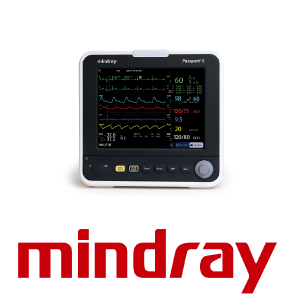
Enterprise Central Nursing Station Integration
Our fetal monitoring solutions seamlessly connect with central monitoring software, enabling real-time telemetry streaming for up to 64 bedside monitors per station, complete with dual-screen display, bed-to-bed alarm management, and remote obstetrician access.
Inquire About Central Station Specs4. Enterprise Integration, Telemetry & Hospital IT Workflow
In modern hospital environments, isolated medical devices create clinical silos and increase nursing documentation burdens. During B2B procurement, IT interoperability and network architecture must be evaluated alongside hardware durability.
4.1 HL7 & DICOM Interoperability Architecture
Fetal monitors supplied by KAKA Medical Technology Co., Ltd. are equipped with native Ethernet (RJ45) and Wi-Fi (802.11 a/b/g/n) networking interfaces. They support standardized communication protocols for enterprise EHR integration (Epic, Cerner, MEDITECH, Allscripts):
- HL7 ADT (Admission, Discharge, Transfer): Automatically populates patient demographic data (Maternal Name, Medical Record Number - MRN, Gestational Age) onto the monitor display via barcode scanning.
- HL7 ORU (Observation Result - Unsolicited): Transmits numerical vital signs, automated CTG metrics, and alarm parameters directly to the electronic medical record.
- DICOM Waveform & Storage Commitment: Converts continuous cardiotocographic waveforms into standardized DICOM PDF or DICOM Waveform objects, storing long-term traces in the hospital’s Vendor Neutral Archive (VNA) or Picture Archiving and Communication System (PACS).
4.2 Wireless Telemetry & Environmental Ingress Protection
Laboring mothers require freedom of movement. Wireless telemetry transmitters operating on dedicated medical telemetry bands (WMTS 608–614 MHz) or ISM 2.4GHz bands allow continuous FHR and TOCO monitoring up to a 300-meter line-of-sight range.
Crucially, transducers used in labor and delivery must feature IPX8 waterproof ingress protection. This certification guarantees that probes can endure continuous immersion in water tanks (for water births and hydrotherapy) and withstand daily immersion in hospital-grade disinfectant solutions (e.g., glutaraldehyde, quaternary ammonium, or sodium hypochlorite) without acoustic lens degradation or internal short-circuiting.
5. Total Cost of Ownership (TCO) & Supply Chain Evaluation
For equipment distributors and hospital purchasing directorates, the initial purchase price of a fetal monitor represents only 40% to 50% of its lifetime operational expense. A rigorous TCO model evaluated over an 8-year service life must account for consumable costs, probe replacement rates, software maintenance, and warranty terms.
5.1 Consumables Analysis: Thermal Paper vs. Paperless Archiving
Traditional CTG monitoring relies heavily on Z-fold thermal recording paper (112mm or 150mm wide format). A high-volume maternity unit utilizing continuous paper recording consumes hundreds of packs of thermal paper per monitor annually, incurring substantial recurring operational expenditures and physical archiving costs.
KAKA Medical Technology Co., Ltd. mitigates consumable overhead by supplying monitors featuring dual-mode paper/paperless workflows: high-capacity internal flash storage (over 24 hours of continuous trace backup per patient) combined with automated network export. Thermal paper printing can be restricted solely to critical event documentation, reducing paper consumption costs by over 70%.
5.2 Probe Reliability & Cable Strain Relief
Historical service data indicates that over 80% of warranty claims and maintenance calls in fetal monitoring involve physical damage to ultrasound and TOCO transducer cables. Procurement specifications should mandate:
- Kevlar-reinforced TPU (Thermoplastic Polyurethane) cabling resisting tensiles over 100N.
- Molded strain-relief collars at transducer and connector junction points.
- Gold-plated multi-pin circular connectors to prevent pin oxidation and signal noise over thousands of insertion cycles.
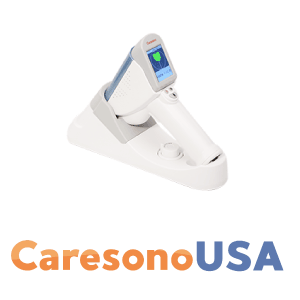
Diagnostic Ultrasound Imaging
Complementary point-of-care ultrasound systems for immediate bedside anatomical evaluation and biophysical profile assessment.
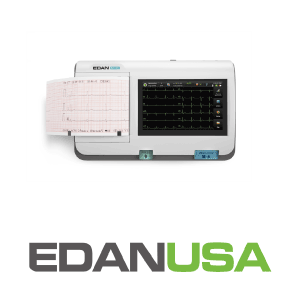
Diagnostic Cardiology Equipment
Full-spectrum diagnostic ECG and telemetry monitors engineered to rigorous FDA 510(k) and ISO 13485 quality standards.
6. Regulatory Compliance & Global Quality Standards
Distributing and operating medical equipment globally requires uncompromised regulatory compliance. Hospital purchasing agents and authorized regional dealers must verify that every fetal monitoring unit carries valid certification documentation for its target jurisdiction:
6.1 Key International Regulatory Benchmarks
- FDA 510(k) Clearance: Required for commercial distribution within the United States. Verifies substantial equivalence to legally marketed predicate devices under product code HGM (System, Monitoring, Fetal Rate and Maternal Contractions).
- CE Mark under EU MDR 2017/745: Class IIb medical device classification under European Medical Device Regulations, requiring rigorous Notified Body audits, continuous clinical evaluation reports (CER), and post-market surveillance (PMS).
- IEC 60601-1 & IEC 60601-1-2: International standards for basic safety and essential performance of medical electrical equipment, including electromagnetic compatibility (EMC) immunity against hospital RF equipment (surgical cautery, mobile devices).
- IEC 60601-2-37: Particular requirements for the basic safety and essential performance of ultrasonic medical diagnostic and monitoring equipment.
7. Frequently Asked B2B Procurement Questions (FAQ)
8. Strategic Partnership & Distributor Supply Chain Solutions
As a global leader in diagnostic equipment distribution, KAKA Medical Technology Co., Ltd. is committed to empowering medical device distributors, government healthcare tenders, and private hospital networks. We streamline procurement by offering flexible logistics solutions, comprehensive warranty coverage, and localized technical training.
Whether you are establishing a new maternity ward, upgrading existing CTG infrastructure to wireless telemetry, or seeking a reliable OEM distribution partner, our experienced team provides end-to-end guidance tailored to your operational requirements.
Partner with KAKA Medical Technology Co., Ltd.
Contact our specialized B2B procurement team today to request wholesale pricing, technical specification sheets, or evaluation demo units for your institution.