Executive Summary
In an era defined by stringent healthcare audits, evolving international MDR (Medical Device Regulations), and margin compression across health networks, procuring FDA approved medical devices (and 510(k) cleared diagnostic capital equipment) is no longer a simple purchasing transaction. It is a strategic risk-mitigation initiative. This technical report provides B2B buyers, OEM procurement managers, and medical device distributors with an actionable architecture to evaluate device clearance pathways, assess quality management systems (QMS), enforce Unique Device Identification (UDI) compliance, and capitalize on direct distributor margins through KAKA Medical Technology Co., Ltd.
Global medical technology procurement faces unprecedented complexity. Hospital procurement directors and independent medical equipment distributors must balance clinical efficacy, strict FDA compliance under 21 CFR Part 820 (transitioning to the Quality Management System Regulation - QMSR aligned with ISO 13485:2016), and supply chain continuity. Purchasing gray-market or non-compliant equipment exposes healthcare providers to catastrophic legal liability, FDA Form 483 warning letters, Medicare/Medicaid reimbursement forfeitures, and clinical failures.
This whitepaper synthesizes 17+ years of master distribution experience from KAKA Medical Technology Co., Ltd., offering a authoritative guide on how diagnostic equipment—spanning multi-channel ECG systems, bedside patient monitors, portable ultrasound diagnostic machines, fetal monitors, and emergency defibrillators (AEDs)—is evaluated, cleared, distributed, and maintained across global markets.
Deconstructing Regulatory Terminology: FDA Approved vs. FDA Cleared vs. FDA Registered
One of the most frequent points of failure in B2B medical supply chains is confusion surrounding regulatory nomenclature. Commercial buyers often use "FDA Approved" as a blanket term, yet the U.S. Food and Drug Administration (FDA) maintains legally distinct classifications based on device risk under the Center for Devices and Radiological Health (CDRH).
B2B Insight: Information Gain Metric
Never accept a basic FDA Establishment Registration number as proof of device legality! Registration simply indicates that a facility is listed on the FDA database. B2B purchasers must demand the specific 510(k) Clearance Number (K-number), Premarket Approval (PMA) order number, or De Novo classification order before importing or distributing medical hardware.
| FDA Status | Legal Basis | Applicable Risk Class | Clinical Data Requirement | Typical B2B Product Categories |
|---|---|---|---|---|
| FDA Cleared | Premarket Notification 510(k) | Class II (Moderate Risk) | Bench testing + Equivalence to Predicate Device (occasional clinical trials) | ECG Machines, Patient Monitors, Ultrasound Scanners, Holter Monitors, Spirometers |
| FDA Approved | Premarket Approval (PMA) | Class III (High Risk / Life Support) | Rigorous human clinical trials proving safety & effectiveness | Implantable Pacemakers, Automated External Defibrillators (AEDs - recent PMA mandate), Stents |
| FDA Exempt | Class I General Controls | Class I (Low Risk) | Exempt from 510(k); must adhere to GMP/QSR registration | Manual Bandages, Stethoscopes, Examination Gloves, Basic Ophthalmic Scopes |
| FDA Registered | Establishment Registration (21 CFR 807) | All Facility Owners | N/A (Administrative listing of manufacturing facility) | Applies to facilities, not an endorsement of individual device safety |
1. Premarket Notification 510(k) Clearance Pathway
The vast majority of diagnostic capital equipment supplied by KAKA Medical Technology Co., Ltd. falls under Class II 510(k) clearance. To achieve 510(k) clearance, the device manufacturer must prove that the product is "substantially equivalent" (SE) to a legally marketed predicate device already operating in the United States. Evaluation parameters include intended use, technological characteristics, software verification and validation (V&V), electromagnetic compatibility (EMC under IEC 60601-1-2), and electrical safety (IEC 60601-1).
2. Premarket Approval (PMA) Rationale
Class III devices—such as life-sustaining emergency resuscitation hardware (Defibrillators/AEDs)—undergo the PMA process, the FDA’s most stringent regulatory evaluation framework. PMA approval requires independent scientific review proving reasonable assurance of safety and effectiveness supported by extensive clinical study data.
Technical Classification & Engineering Evaluation of Diagnostic Equipment
For B2B buyers evaluating FDA approved medical devices, technical specification compliance is as critical as regulatory paperwork. Below is an engineering and clinical overview of primary diagnostic capital equipment categories distributed globally by KAKA Medical Technology Co., Ltd.
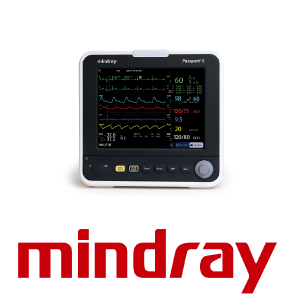
12-Lead Diagnostic ECG/EKG Machines
FDA 510(k) cleared multi-channel resting ECG systems. Features Glasgow and Marquette arrhythmia interpretation algorithms, digital signal filters (0.05 Hz to 150 Hz), DICOM/HL7 bi-directional EHR integration, and high-resolution thermal printouts.
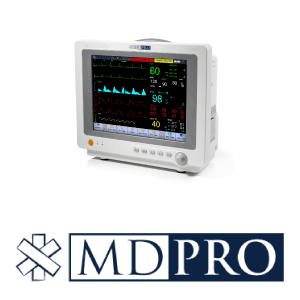
Bedside Vital Signs & Patient Monitors
Class II multi-parameter bedside monitors. Modular architecture supporting ECG, Masimo/Nellcor SpO2, SunTech NIBP, Dual-Temp, Dual-IBP, and Sidestream/Mainstream Capnography (EtCO2) for ICU, OR, and PACU environments.
A. Cardiology Diagnostics: Multi-Channel ECG & Holter Monitoring Architecture
Multi-channel EKG machines are evaluated based on digital signal processor (DSP) resolution, common-mode rejection ratio (CMRR > 105 dB), input impedance (> 50 MΩ), and sampling rates (typically 8000 Hz/channel for precise pacemaker spike detection). Advanced 12-lead systems supplied by KAKA Medical Technology feature automated interpretation algorithms validated against established clinical databases (such as CSE and AHA data sets).
Ambulatory Holter systems require low-power micro-controller design capable of continuous 24-hour to 7-day ECG recording across 3 or 12 channels. Software validation for Holter analysis packages must comply with FDA guidance for Software as a Medical Device (SaMD), including AI-assisted arrhythmia classification (atrial fibrillation, PVCs, ST-segment elevation).
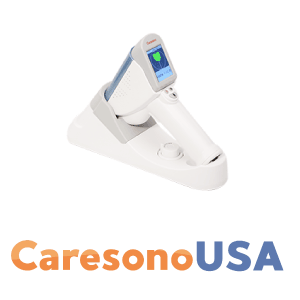
Diagnostic Ultrasound & Bladder Scanners
FDA cleared real-time 3D/4D ultrasound systems and automated 3D bladder volume scanners. Featuring high-frequency linear, convex, and phased array transducers with automated organ tissue harmonics.
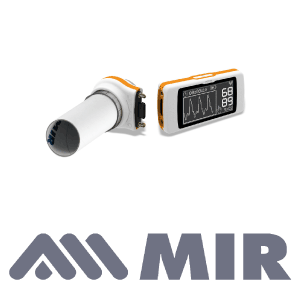
Antepartum & Intrapartum Fetal Monitors
Cardiotocography (CTG) systems with dual-fetal heart rate (FHR) ultrasound transducers, TOCO pressure monitoring, auto-fetal movement detection, and central monitoring system network integration.
B. Patient Monitoring & Capnography Systems
Bedside patient monitoring hardware must operate continuously in high-acuity environments without drift or signal loss. Key technical specifications include:
- Non-Invasive Blood Pressure (NIBP): Oscillometric step-deflection algorithms calibrated against intra-arterial catheter benchmarks.
- Pulse Oximetry (SpO2): Low-perfusion signal processing algorithms preventing motion artifact errors during patient transport.
- Capnography (EtCO2): Micro-stream or side-stream infrared absorption spectroscopy operating at 50 mL/min sampling rates, essential for post-operative respiratory safety and anesthesia monitoring.
C. Resuscitation & Emergency Hardware (AEDs & Defibrillators)
Under current FDA guidelines, all Automated External Defibrillators (AEDs) require PMA clearance. Procurement teams must verify that AED devices feature biphasic truncated exponential (BTE) waveform delivery, automatic impedance compensation (25 Ω to 175 Ω), self-testing battery fuel-gauge protocols, and pediatric attenuator capabilities.
The 7-Step Vendor Auditing Protocol for Medical Device Procurement
To eliminate procurement vulnerabilities, KAKA Medical Technology Co., Ltd. recommends that hospital purchasing teams and medical distributors implement a standardized 7-step vendor audit prior to issuing purchase orders for capital diagnostic devices.
- FDA 510(k) / PMA Database Verification: Cross-reference the vendor’s legal manufacturer name and product trade name against the FDA CDRH database. Verify that the 510(k) summary (K-number) covers the exact intended clinical use.
- ISO 13485:2016 Certification Audit: Ensure that manufacturing sites possess valid ISO 13485 credentials audited by an accredited Registrar/Notified Body (e.g., TÜV SÜD, BSI, SGS).
- Quality System Regulation (21 CFR Part 820) / QMSR Alignment: Confirm the manufacturer maintains documented procedures for Design Controls, Corrective and Preventive Actions (CAPA), and Medical Device Reporting (MDR) under 21 CFR 803.
- Cybersecurity & EMR Interoperability Assessment: For connected medical devices (ECG, monitors, ultrasounds), audit compliance with FDA Guidance on Cybersecurity in Medical Devices (MDR/Premarket submissions) including Software Bill of Materials (SBOM) and AES-256 data encryption.
- Biocompatibility & Environmental Testing Validation: Inspect test certificates for patient-contacting parts (ECG electrodes, SpO2 sensors, ultrasound probes) adhering to ISO 10993-1 (cytotoxicity, sensitization, irritation).
- Unique Device Identification (UDI) Verification: Confirm that device packaging and hardware feature compliant UDI barcodes (GS1 or HIBCC format) containing Device Identifiers (DI) and Production Identifiers (PI - lot/serial/expiration date).
- Warranty Infrastructure & Technical Support SLAS: Ensure the distributor offers USA-based technical support, readily available replacement components, calibration services, and explicit RMA terms.
Partner With a Direct Master Distributor
KAKA Medical Technology Co., Ltd. eliminates supply chain intermediaries, offering wholesale pricing, 100% FDA-compliant diagnostic devices, and dedicated technical support for global distributors.
Request Dealer Pricing & Regulatory DossiersThe KAKA Medical Technology Infrastructure & Value Proposition
Founded to solve the operational friction facing healthcare organizations and international distributors, KAKA Medical Technology Co., Ltd. stands as a premier master distributor of FDA approved medical devices and diagnostic solutions.
15+ Premium Brands
Direct master distribution agreements with leading global manufacturers including Mindray, Edan, MIR, Riester, and Caresono.
USA-Based Service Center
In-house biomedical technical support, quality testing, device configuration, and warranty repairs operating from San Diego, CA.
Turnkey Logistics
Streamlined international shipping, dropshipping capabilities for dealers, and customs brokerage support for export markets.
Operating in an environment where healthcare reimbursements are continuously scrutinized and medical practices face margin pressure, KAKA Medical Technology enables distributors and clinics to acquire high-tier diagnostic equipment at realistic price points. By eliminating multiple tiers of broker markup, we empower resellers to capture higher gross margins while delivering clinically verified hardware backed by comprehensive warranties.
Global Supply Chain Traceability, MDR Alignment & Risk Mitigation
Medical device supply chains are vulnerable to global logistical disruptions, tariff fluctuations, and regulatory non-compliance. Distributors operating in international markets must navigate dual compliance: maintaining FDA CDRH requirements in the United States while aligning with European Union Medical Device Regulation (EU MDR 2017/745) protocols internationally.
1. UDI and GUDID Integration
Under FDA UDI rules, every Class II and Class III diagnostic device distributed by KAKA Medical Technology Co., Ltd. is registered in the Global Unique Device Identification Database (GUDID). This enables end-to-end traceability from the assembly line to patient application, dramatically simplifying recall management and post-market surveillance.
2. Cold-Chain & Sensored Warehousing
Precision diagnostic hardware—specifically ultrasound transducers, fetal monitor probes, and optical sensors—can suffer calibration degradation when exposed to extreme thermal swings or mechanical vibration during transit. KAKA Medical Technology enforces ISTA 3A packaging standards and climate-controlled warehousing to safeguard device integrity prior to dispatch.
Commercial Economics, CPT Coding & ROI Analysis for B2B Buyers
Capital equipment procurement in clinical settings is intrinsically linked to medical billing reimbursement. Healthcare facilities investing in diagnostic equipment generate rapid return on investment (ROI) by performing in-office diagnostic procedures billable under specific Current Procedural Terminology (CPT) codes.
| Diagnostic Device Category | Primary Clinical Use | Relevant CPT Code Examples | Estimated Clinical Payback Period* |
|---|---|---|---|
| Multi-Channel 12-Lead ECG | Routine Cardiac Screening / Symptom Evaluation | 93000 (Complete ECG), 93005 (Tracing), 93010 (Interpretation) | 3 to 5 Months (based on 15 tests/week) |
| Ambulatory Blood Pressure (ABPM) | 24-Hour Masked / White-Coat Hypertension Assessment | 93784 (Full service), 93786 (Recording), 93790 (Review) | 4 to 6 Months (based on 8 tests/week) |
| Digital Holter Monitors | 24-48 Hr Arrhythmia Detection & Atrial Fibrillation | 93224 (24-hr recording & analysis), 93225, 93227 | 2 to 4 Months (based on 10 tests/week) |
| 3D Portable Bladder Scanners | Non-Invasive Urinary Retention & PVR Assessment | 51798 (Ultrasound measurement of residual urine volume) | 5 to 7 Months (based on 20 scans/week) |
| Diagnostic Spirometers | Pulmonary Function Testing (COPD / Asthma) | 94010 (Spirometry tracing), 94060 (Bronchodilator response) | 3 to 6 Months (based on 12 tests/week) |
*Note: Reimbursement rates and payback metrics vary by geographic region, payer mix (Medicare/Private), and clinical volume. Consult qualified medical billing specialists for regional fee schedules.
High-Intent B2B Sourcing FAQ: FDA Approved Medical Devices
FDA Cleared refers to Class II medical devices that have submitted a 510(k) premarket notification demonstrating "substantial equivalence" to a predicate device already on the US market. FDA Approved applies to Class III high-risk or life-sustaining devices (such as pacemakers or AEDs under recent regulations) that require Premarket Approval (PMA) supported by rigorous human clinical trials proving safety and efficacy.
Purchasers should request the manufacturer’s 510(k) clearance number (K-number) and search the official FDA CDRH 510(k) database online. Verify that the product code, applicant name, trade name, and cleared clinical indications match the physical device documentation provided by the vendor.
KAKA Medical Technology Co., Ltd. provides full regulatory compliance dossiers upon request, including FDA 510(k)/PMA confirmation letters, ISO 13485 certificates, Declarations of Conformity (CE/MDR), Certificates of Free Sale (CFS) for international export, and detailed product warranty cards.
Yes. KAKA Medical Technology Co., Ltd. acts as a global master distributor. We assist authorized reseller partners with bulk distributor pricing, international logistics, customs paperwork, blind dropshipping services, and factory-trained technical support for post-sale assistance.
Yes, diagnostic devices featuring software or firmware (such as ECG interpretation algorithms or Holter PC suites) distributed by KAKA Medical Technology include validated software maintenance releases to ensure ongoing cybersecurity compliance and operating system compatibility.