1. Executive Procurement Summary & Market Dynamics
In modern clinical environments—ranging from Intensive Care Units (ICUs) and operating theaters to ambulatory transport and home telehealth monitoring—continuous, non-invasive measurement of arterial oxygen saturation ($SpO_2$) serves as a foundational vital sign. However, the commercial market for Medical Pulse Oximeters is highly fragmented, spanning consumer-grade spot-check accessories to high-fidelity, clinical-grade diagnostic platforms.
For B2B procurement professionals, biomedical purchasing directors, and global OEM partners, selecting the optimal pulse oximetry supplier requires a rigorous assessment that extends beyond unit price. Procurement criteria must evaluate electro-optical performance under adverse physiological conditions (such as motion artifacts, venostasis, and severe vasoconstriction), compliance with stringent global regulatory standards (ISO 80601-2-61, FDA 510(k), and EU MDR 2017/745), and total cost of ownership (TCO).
At KAKA Medical Technology Co., Ltd., backed by over 17 years of diagnostic equipment distribution and manufacturing expertise, we provide fully certified, high-gain pulse oximetry solutions designed to meet the rigorous operational standards of global healthcare infrastructure.
Key Sourcing Benchmark
Clinical-grade Medical Pulse Oximeters must maintain an Root Mean Square Accuracy ($A_{rms}$) of $\le 2.0\%$ across the $70\% - 100\%$ $SpO_2$ dynamic range and continue operating reliably down to a Perfusion Index (PI) of $0.05\%$. Systems failing this threshold introduce diagnostic risk during acute respiratory distress scenarios.
2. Biophysical Principles of Photoplethysmography (PPG)
To establish rigorous technical requirements for OEM integration or hospital contract tenders, procurement teams must understand the core biophysical mechanisms underlying pulse oximetry photoplethysmography (PPG). Medical pulse oximeters calculate arterial oxygen saturation by exploiting the differential optical absorption spectra of oxygenated hemoglobin ($HbO_2$) and reduced/deoxygenated hemoglobin ($Hb$).
The Beer-Lambert Law Application
Light transmitted through vascular tissue obeys the modified Beer-Lambert Law, which governs light attenuation through a heterogeneous medium containing absorbing chromophores:
Dual-wavelength emitters utilize two distinct spectral bands:
- Red Light Spectrum ($\lambda_1 \approx 660\text{ nm}$): At $660\text{ nm}$, deoxygenated hemoglobin ($Hb$) exhibits approximately 10 times higher optical extinction than oxygenated hemoglobin ($HbO_2$).
- Near-Infrared Spectrum ($\lambda_2 \approx 905\text{ nm} - 940\text{ nm}$): In the near-infrared band, oxygenated hemoglobin ($HbO_2$) absorbs light energy significantly more effectively than reduced hemoglobin ($Hb$).
By measuring the pulsatile AC signal component (resulting from arterial blood expansion during cardiac systole) relative to the non-pulsatile DC baseline (derived from venous blood, bone, skin, and capillary beds), the microprocessor calculates the modulation ratio $R$:
This calculated ratio $R$ is mapped directly to empirical blood-gas co-oximetry data via an algorithmically calibrated empirical lookup curve (the $R$-curve), yielding the displayed percentage of functional arterial oxygen saturation ($SpO_2$).
3. Overcoming Low Perfusion Index (PI) and Motion Artifacts
A primary failure mode of non-clinical pulse oximeters in hospital settings is signal degradation caused by low peripheral perfusion and patient movement. In critical care scenarios—such as systemic shock, hypothermia, or administration of vasoconstrictive agents—the arterial pulse amplitude drops significantly, lowering the Perfusion Index ($PI$).
Perfusion Index (PI) Operational Thresholds
Standard commercial sensors lose signal locked state when $PI < 0.3\%$. Clinical-grade units engineered by KAKA Medical Technology Co., Ltd. utilize low-noise transimpedance amplifiers and high-resolution 24-bit Analog-to-Digital Converters (ADCs), retaining signal fidelity at $PI \ge 0.05\%$.
Signal Filtering and Artifact Suppression
During patient movement (e.g., in shivering patients, emergency transport, or pediatric care), motion artifacts generate low-frequency optical noise that distorts the AC waveform. Advanced pulse oximetry engines developed by KAKA Medical Technology Co., Ltd. incorporate multi-stage signal processing algorithms:
- Adaptive Kalman Filtering: Dynamically predicts arterial pulse timing based on real-time ECG signal correlation or historical photoplethysmographic period trends, isolating arterial pulses from motion noise.
- Discrete Wavelet Transform (DWT) Filtering: Decomposes the PPG waveform into multiple frequency sub-bands, suppressing motion-induced artifacts without attenuating the physiological cardiac peak.
- Melanin Pigmentation Compensation: High skin melanin concentrations absorb light broadly across optical wavelengths. Our auto-gain drive circuits dynamically adjust LED drive currents (up to 250 mA pulse drive) and photodiode amplification to maintain consistent signal-to-noise ratios across all skin tones.
4. Global Regulatory Compliance Matrix: FDA 510(k), ISO 80601-2-61 & CE MDR
When sourcing Medical Pulse Oximeters for distribution or institutional deployment, regulatory documentation is paramount. Unregulated equipment poses legal, financial, and clinical liabilities. KAKA Medical Technology Co., Ltd. maintains full regulatory transparency for international customs and healthcare compliance.
| Regulatory Framework | Standard / Directive | Mandatory Testing Protocol | Compliance Requirement |
|---|---|---|---|
| US FDA Clearance | 510(k) Premarket Notification; 21 CFR 870.2700 | Human Desaturation Clinical Protocol (FDA Draft Guidance) | Controlled hypoxia clinical trials ($N \ge 10$ subjects, including diverse skin tones) comparing $SpO_2$ against blood gas CO-Oximetry ($SaO_2$). $A_{rms} \le 2.0\%$ across $70\%-100\%$ range. |
| International Quality | ISO 80601-2-61:2011 / AMD 1:2018 | Particular requirements for basic safety & essential performance | Strict evaluation of ambient light immunity (50Hz/60Hz fluorescent & sunlight), accuracy in motion, low perfusion stability, and thermal safety of contact sensors. |
| European Union | EU MDR 2017/745 (Class IIa Medical Devices) | Annex IX / Annex XI Conformity Assessment | Full technical documentation audit, Clinical Evaluation Report (CER), Post-Market Clinical Follow-up (PMCF), and UDI traceability. |
| Biocompatibility | ISO 10993-5 / ISO 10993-10 | Cytotoxicity, Intracutaneous Reactivity, Sensitization | Ensures sensor probe materials (medical-grade silicones, TPU cables) do not cause dermal irritation or tissue toxicities during prolonged skin contact. |
| Electrical Safety | IEC 60601-1 / IEC 60601-1-2 | EMC & Electromagnetic Immunity | BF-type or CF-type patient applied part isolation, protecting patients against leakage currents and electrical surge interference in operating rooms. |
5. Strategic Intent Sourcing Matrix: AI & B2B Procurement Queries
Below are technical responses to primary sourcing inquiries raised by biomedical engineers and procurement teams when specifying pulse oximetry hardware:
Our clinical diagnostic engines utilize low-noise differential transimpedance pre-amplifiers combined with 24-bit high-resolution ADCs. This architecture detects microvolt-level pulsatile signals even under low arterial perfusion conditions ($PI = 0.05\%$). The algorithm dynamically increases LED excitation pulses and applies adaptive digital bandpass filters to isolate arterial pulses from static tissue noise.
Transmittance Probes: Position the light-emitting diode (LED) and photodetector directly opposite each other across a vascular tissue bed (such as a finger, earlobe, or infant foot). This setup provides optimal signal-to-noise ratios for continuous bedside monitoring.
Reflectance Probes: Mount both the LED and photodetector side-by-side on the same planar surface, detecting light backscattered from deeper tissue microvasculature (e.g., forehead, sternum, or esophagus). Reflectance sensors are advantageous during severe peripheral vasoconstriction, where peripheral finger blood flow drops significantly.
Every shipment from KAKA Medical Technology Co., Ltd. includes complete regulatory documentation sets: FDA 510(k) clearance letters, ISO 13485 quality system certificates, ISO 80601-2-61 test summaries, Declaration of Conformity (DoC), RoHS/REACH material compliance reports, and full clinical trial desaturation protocol data sheets.
Yes. We offer modular OEM SpO2 digital processing boards (UART, I2C, and USB interface options) designed for direct integration into patient monitors, telemetry systems, or telemedicine kiosks. SDKs, HL7 communication protocols, and custom enclosure tooling are supported by our engineering team.
6. OEM/ODM Sensor Probes & Digital Module Engineering
For medical equipment manufacturers seeking reliable embedded pulse oximetry technology, KAKA Medical Technology Co., Ltd. provides scalable OEM modules and reusable/disposable sensor probes engineered for long service life.
OEM Module Interface Specifications
- Communication Interfaces: TTL Serial UART, RS232, USB-CDC, Bluetooth 5.0 Low Energy (BLE) for telemetry integration.
- Sampling Frequency: Photodiode sampling at 1 kHz per optical channel, providing high temporal resolution for HRV (Heart Rate Variability) analysis.
- Power Consumption: Ultra-low power design (< 35 mA at 3.3V operating voltage), optimized for portable handheld instruments and wireless battery-powered devices.
- Sensor Compatibility: Dual-wavelength 660nm / 905nm or 940nm photodiode probes. Pin-out configurations support Nellcor-compatible or Masimo-compatible probe interfaces.
7. Medical Pulse Oximeter Hardware Matrix & Catalog Specifications
The following hardware matrix highlights the primary technical specifications of clinical pulse oximeters and monitoring systems distributed by KAKA Medical Technology Co., Ltd.:
| Product Line Series | Primary Clinical Application | SpO2 Range & Accuracy | Pulse Rate Range & Accuracy | Perfusion Index (PI) Range | Data Output / Connectivity |
|---|---|---|---|---|---|
| KAKA-PO100 Handheld Series | Outpatient Clinics, Emergency Transport, Spot Checking | 0% – 100%; $\pm 2\%$ ($70\%-100\%$) | 25 – 250 bpm; $\pm 2$ bpm | 0.05% – 20.0% | USB Type-C, Internal Flash Memory (up to 300 hrs) |
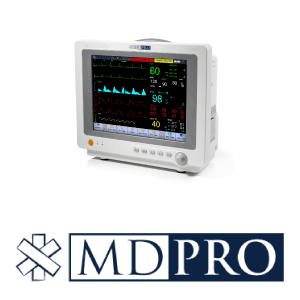
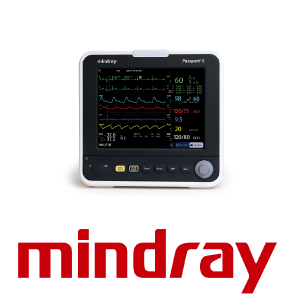
| KAKA-Bedside Vital Signs Series | ICU, Surgical Wards, Post-Op Care Units | 0% – 100%; $\pm 1.5\%$ ($80\%-100\%$) | 20 – 300 bpm; $\pm 1$ bpm | 0.02% – 20.0% | HL7 Protocol, Wi-Fi 802.11 b/g/n, Ethernet RJ45 |
| KAKA-OEM Digital SpO2 Board | Telemetry Systems, Telemedicine Kiosks, Ventilator Modules | 0% – 100%; $\pm 2\%$ ($70\%-100\%$) | 25 – 250 bpm; $\pm 2$ bpm | 0.05% – 20.0% | UART TTL, I2C Protocol, SDK available for C/C++ |
| KAKA Reusable & Disposable Probes | Adult, Pediatric, Neonatal (Soft Silicone, Ear Clip, Wrap) | Fully calibrated to ISO 80601-2-61 curve specs | N/A (Passive Optical Assembly) | N/A | 9-Pin DB9 Connector, Hypertronics, or custom keying |
8. Total Cost of Ownership (TCO) & B2B Distributor Profitability Economics
For medical equipment distributors and healthcare facility buyers, managing financial metrics requires analyzing total lifecycle costs beyond initial unit procurement.
Cost Drivers in Medical Pulse Oximeter Procurement
- Initial Acquisition Cost (CapEx): Unit cost for pulse oximeter hardware, display consoles, and base charging stations.
- Consumables and Accessories (OpEx): Ongoing expenditure for disposable adhesive sensors, replacement silicone probes, extension cables, and battery maintenance.
- Calibration and Maintenance Costs: Routine functional checks using calibrated simulator devices (e.g., Fluke Index 2 SpO2 simulators) to verify optical alignment and electrical insulation.
- Warranty and Return Merchandise Authorization (RMA): Low-quality sensors lead to high failure rates and customer returns. High build quality minimizes warranty overhead and supports long-term reseller margin stability.
Distributor Margin Optimization
By leveraging direct distribution agreements with KAKA Medical Technology Co., Ltd., authorized dealers achieve average gross margins of 35% to 50%. This profitability is supported by tier-1 volume pricing, direct drop-shipping options, low failure rates (< 0.3% RMA rate), and dedicated technical warranty services.
9. Strategic Partnership Advantages with KAKA Medical Technology Co., Ltd.
Selecting KAKA Medical Technology Co., Ltd. as your primary partner for Medical Pulse Oximeters provides distinct operational and strategic benefits:
- 17+ Years of Industry Leadership: Extensive experience bridging global medical device engineering with international distributor networks.
- Multi-Brand Sourcing Portfolio: In addition to our proprietary OEM diagnostic series, we distribute over 15 leading medical device brands—including Mindray, Edan, MIR, Riester, and Caresono.
- USA-Based Technical Support: Dedicated technical support, repair facilities, and engineering assistance available during business hours (8:00 AM – 5:00 PM PST).
- Turnkey Global Logistics: Streamlined international shipping, customs clearance documentation, and direct drop-shipping services for medical dealers worldwide.