1. Executive Summary & Market Dynamics
In modern healthcare systems, the bedside patient monitor serves as the primary diagnostic nexus in intensive care units (ICUs), operating rooms (ORs), emergency departments (EDs), and general sub-acute wards. As medical facilities worldwide undergo rapid digital transformations, the procurement criteria for bedside monitors have shifted dramatically. Procurement officers, hospital bio-engineers, and B2B distributors no longer evaluate devices merely on baseline parameter display; they demand multi-layered interoperability, real-time algorithmic arrhythmia detection, low failure rates, and predictable total cost of ownership (TCO).
According to clinical procurement intelligence compiled by KAKA Medical Technology Co., Ltd., global demand for advanced bedside monitoring solutions is expanding at an estimated CAGR of 7.4%. This growth is catalyzed by three core forces: the post-pandemic expansion of step-down telemetry units, strict regulatory mandates regarding continuous patient surveillance, and the integration of artificial intelligence (AI) to reduce "alarm fatigue" among nursing staff.
Clinical Insight & Information Gain Paradigm
Historically, hospitals faced high capital expenditures when replacing legacy vital signs platforms. Today, master distributors like KAKA Medical Technology Co., Ltd. enable healthcare facilities and regional supply chains to deploy FDA-cleared, high-acuity bedside monitors equipped with modular parameter flexibility. This strategy minimizes initial CapEx while preserving long-term operational adaptability across diverse patient care settings.
This whitepaper provides an exhaustive technical and commercial breakdown of bedside patient monitors. Designed specifically for B2B supply chain managers, biomedical engineers, hospital procurement committees, and medical device resellers, this document details sensor mechanics, network cybersecurity, regulatory clearance pathways, and margin optimization models necessary to execute successful capital equipment purchases.
2. Vital Parameter Architecture & Signal Processing
At its core, a clinical-grade bedside patient monitor converts analog bio-electric, mechanical, and optical signals into high-fidelity digital waveforms and numerical trends. Understanding the engineering underlying these parameters is vital for clinical evaluation and product selection.
2.1 Electrocardiography (ECG) and ST/Arrhythmia Analysis
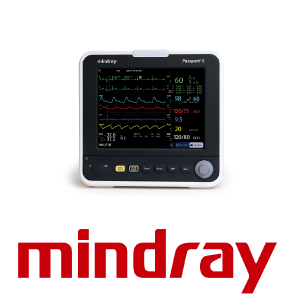
Modern bedside monitors support selectable 3-lead, 5-lead, and 12-lead ECG configurations. Signal acquisition requires high-input impedance (>10 MΩ) and high Common Mode Rejection Ratio (CMRR > 105 dB) to filter out ambient electrosurgical unit (ESU) interference and power line hum. Premium platforms distributed by KAKA Medical Technology incorporate advanced digital signal processing (DSP) algorithms capable of:
- Multi-Lead Arrhythmia Detection: Real-time identification of 23+ arrhythmia classes, including Asystole, Ventricular Fibrillation (V-Fib), Ventricular Tachycardia (V-Tach), Atrial Fibrillation (A-Fib), and Premature Ventricular Contractions (PVCs).
- ST-Segment Elevation/Depression Tracking: Continuous multi-channel ST measurement referencing the ISO-electric point, allowing immediate detection of intraoperative myocardial ischemia.
- Pacemaker Detection & Rejection: Dedicated hardware circuits isolate pacemaker pulses to prevent false R-wave counting during pacing events.
2.2 Pulse Oximetry (SpO₂) and Low-Perfusion Motion Artifact Rejection
Pulse oximetry measures arterial oxygen saturation non-invasively via spectrophotometry. Standard Beer-Lambert law calculations fail during patient movement or low-perfusion states (e.g., hypothermia, septic shock, cardiac arrest). Leading bedside monitors available through KAKA Medical Technology Co., Ltd. leverage proprietary or industry-standard optical algorithms (such as Masimo SET® or Nellcor™ Oximax™ technology) that utilize multi-wavelength signal processing to separate arterial pulsation from venous movement and ambient noise. This ensures accurate SpO₂ readings even at low perfusion indices down to 0.05%.
2.3 Non-Invasive Blood Pressure (NIBP) & Step-Deflection Oscillometry
NIBP measurement relies on automated oscillometric step-deflation. Advanced bedside monitors execute dual-burst deflation algorithms that reduce total cuff inflation duration by up to 35%, significantly improving patient comfort in pediatric and neonate care units. Furthermore, built-in overpressure protection valves independently monitor cuff pressure hardware to prevent vascular trauma during inflation cycles.
2.4 Capnography (EtCO₂) and Invasive Pressures (IBP)
For high-acuity environments such as the ICU and OR, bedside monitors must support continuous End-Tidal Carbon Dioxide (EtCO₂) monitoring via mainstream or sidestream sampling:
- Sidestream EtCO₂: Samples micro-volume gas rates (50 mL/min), optimal for non-intubated patients utilizing dual-nasal sampling cannulas.
- Mainstream EtCO₂: Uses an inline infrared sensor attached directly to the endotracheal tube adapter, delivering zero-delay response time crucial for mechanical ventilation management.
- Invasive Blood Pressure (IBP): Multi-channel IBP modules connect to arterial lines, central venous pressure (CVP) catheters, or pulmonary artery catheters, sampling fluid column pressure changes at rates up to 500 Hz.
3. Modular vs. Compact Architecture Evaluation
When structuring a B2B bulk acquisition or equipping a hospital wing, procurement managers must choose between compact (integrated) bedside monitors and flexible modular patient monitoring systems. Both hardware architectures offer unique clinical and financial trade-offs.
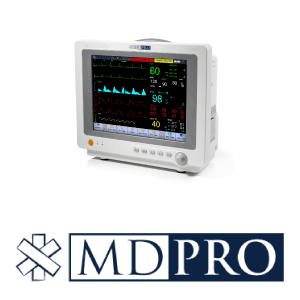
Compact monitors integrate the display, processing engine, and parameter acquisition ports into a unified chassis. Conversely, modular monitors utilize a central processing hub paired with hot-swappable parameter modules (e.g., cardiac output modules, BIS depth-of-anesthesia units, multi-gas analyzers). Below is a comparative technical matrix designed to assist B2B purchasing decisions:
| Architectural Feature | Compact / Integrated Monitors | Modular High-Acuity Systems |
|---|---|---|
| Primary Clinical Settings | Outpatient surgery, step-down units, ED, general wards, transport | Intensive Care Units (ICU), Operating Rooms (OR), Cardiac Care Units (CCU) |
| Parameter Expandability | Fixed parameter set (typically 5-standard: ECG, SpO2, NIBP, Temp, Resp) | Hot-swappable modules (EtCO2, 4x IBP, Cardiac Output, Anesthesia Gas, BIS) |
| Capital Expenditure (CapEx) | Lower upfront cost per unit (30% to 50% savings) | Higher initial investment; lower expansion cost per bed over 7-10 years |
| Serviceability & Maintenance | Requires entire unit depot service if internal board fails | Module swap out without taking display or patient network offline |
| Transport Flexibility | High portability; integrated handle and lithium-ion batteries | Requires plug-in dock or secondary transport module transition |
| Distributor Margin Profile | High-volume sales turnover with predictable accessory replacement cycles | Higher revenue per customer account; substantial recurring module sales |
Strategic B2B Sourcing Advice
For most mid-sized hospitals and ambulatory surgical centers (ASCs), hybrid deployment yields optimal financial performance. Facilities typically standardize on compact multi-parameter units for 70% of bed capacity while reserving modular architectures for high-acuity surgical and intensive care suites. KAKA Medical Technology Co., Ltd. supports hybrid ordering structures, providing volume tier pricing across both product categories.
4. EMR Interoperability & Cybersecurity Standards
Modern medical devices can no longer exist as isolated data islands. A major driver in B2B patient monitor procurement is the seamless flow of vital signs data directly into hospital Electronic Medical Records (EMR / EHR) platforms such as Epic, Cerner, MEDITECH, and Allscripts. Bedside monitors supplied by KAKA Medical Technology Co., Ltd. adhere to international healthcare IT communication protocols.
4.1 HL7, FHIR, and IEEE 11073 Interoperability
To eliminate manual nursing documentation errors and support clinical decision support systems (CDSS), bedside monitors must translate raw biometric streams into structured data. Our distribution portfolio features native compatibility with:
- HL7 v2.x & HL7 v3 Interfaces: Transmits real-time physiological metrics, alarm states, and numerical trend data directly to central gateway servers via TCP/IP protocols.
- FHIR (Fast Healthcare Interoperability Resources) REST APIs: Facilitates lightweight JSON/XML data exchange for mobile healthcare applications and remote patient telemetry dashboards.
- IEEE 11073 Point-of-Care Medical Device Communication: Ensures standard nomenclature and object-oriented data modeling across multi-vendor clinical devices.
4.2 Wireless Telemetry & Network Security (HIPAA Compliance)
As hospitals migrate toward wireless patient telemetry, network security has become a critical regulatory requirement. Compromised medical network endpoints pose severe risks to patient safety and data privacy. High-grade bedside monitors supplied by KAKA Medical Technology incorporate robust enterprise cybersecurity architecture:
- Dual-Band Wi-Fi (2.4 GHz / 5.0 GHz): Supports 802.11 a/b/g/n wireless standards with seamless roaming algorithms to maintain continuous telemetry packet transmission during intra-hospital patient transport.
- Enterprise WPA2/WPA3 Authentication: Compatible with 802.1X EAP-TLS, EAP-PEAP, and RADIUS authentication servers to prevent unauthorized network entry.
- Data Encryption & Audit Logs: AES-256 bit encryption for data at rest and in transit, paired with HIPAA-compliant access controls and non-volatile audit logs.
5. Regulatory Pathways: FDA 510(k), CE MDR & Quality Management
For B2B distributors and medical device importers, regulatory verification is non-negotiable. Importing non-compliant capital equipment risks customs seizures, severe regulatory penalties, and reputational damage. KAKA Medical Technology Co., Ltd. guarantees that 100% of our diagnostic medical devices undergo strict regulatory vetting before entering global supply chains.
Compliance & Quality Assurance Guarantee
Every bedside monitor, ECG machine, and ultrasound system supplied by KAKA Medical Technology Co., Ltd. maintains active FDA 510(k) clearances, holds CE Mark certifications under the European Medical Device Regulation (EU MDR 2017/745), and is manufactured in facilities certified to ISO 13485:2016 quality management standards.
5.1 Essential Regulatory Standards for Patient Monitors
When auditing potential patient monitor suppliers, biomedical engineers and regulatory compliance officers must confirm compliance with the following international standards:
- ANSI/AAMI ES60601-1: General requirements for basic safety and essential performance of medical electrical equipment.
- IEC 60601-1-2: Electromagnetic compatibility (EMC) testing, ensuring the monitor does not interfere with defibrillators, surgical lasers, or cellular networks.
- IEC 60601-2-49: Particular requirements for the basic safety and essential performance of multi-function patient monitoring equipment.
- ISO 80601-2-61: Particular requirements for pulse oximeter equipment safety and accuracy across diverse skin tones and perfusion levels.
By providing complete technical documentation packages—including 510(k) summary letters, Declaration of Conformity (DoC) documents, and IEC test reports—KAKA Medical Technology simplifies local registration for international distributors operating across North America, Latin America, Europe, Asia-Pacific, and the Middle East.
Partner With a Master Medical Device Distributor
Gain access to competitive wholesale pricing, FDA-cleared inventory, and dedicated USA technical support.
6. Total Cost of Ownership (TCO) & Financial ROI Framework
Evaluating bedside patient monitors on initial purchase price alone leads to flawed financial projections. Hospital procurement departments must calculate the Total Cost of Ownership (TCO) over an estimated 7-to-10-year equipment lifecycle. TCO encompasses initial capital outlay, accessory consumption rates, preventative maintenance, software licensing, and potential downtime losses.
6.1 Breakdown of Lifecycle Cost Components
- Initial Hardware Acquisition (35–45% of Lifecycle TCO): Main display units, parameter modules, mounting brackets, central station server licenses.
- Consumables and Accessories (35–40% of Lifecycle TCO): Reusable vs. disposable NIBP cuffs, SpO₂ extension cables, 3/5-lead ECG trunk cables, temperature probes, and EtCO₂ sampling lines.
- Service & Calibration (15–20% of Lifecycle TCO): Annual biomedical safety checks, battery replacements (typically every 24–36 months), software firmware upgrades, and out-of-warranty hardware repairs.
6.2 Financial ROI Modeling for Healthcare Facilities
By standardizing on bedside monitors distributed by KAKA Medical Technology Co., Ltd., clinical institutions achieve favorable ROI metrics through:
- CPT Code Reimbursement Optimization: Continuous multi-parameter monitoring enables hospitals and clinics to accurately submit eligible CPT billing codes for diagnostic cardiac and respiratory telemetry monitoring.
- Open-Access Accessory Compatibility: Unlike proprietary OEM manufacturers that enforce locked sensor connectors, platforms supported by KAKA Medical Technology allow the use of standard, cost-effective universal accessories, reducing recurring supply costs by up to 40%.
- Extended Product Lifecycle & Modular Upgradability: Modular design permits selective parameter upgrades without replacing the main screen housing, deferring major capital reinvestment cycles.
7. KAKA Medical Technology Wholesale Advantage
As a leading international medical device distributor with over 17 years of enterprise experience, KAKA Medical Technology Co., Ltd. acts as a strategic growth engine for medical equipment dealers, hospital supply networks, and healthcare providers worldwide.
7.1 Why Leading Medical Distributors Choose KAKA Medical Technology
- Portfolio of 15+ World-Class Brands: We aggregate top-tier diagnostic brands—including MDPro, Mindray, Edan, MIR, Riester, and Caresono—into a centralized catalog, streamlining vendor management for our purchasing partners.
- 100% FDA-Approved & Certified Catalog: We eliminate regulatory risk. Every device in our product lines meets rigorous clinical performance standards and international quality clearances.
- USA-Based Technical Support & Depot Service: Our dedicated biomedical engineering team located in California provides real-time technical assistance, warranty repairs, quality control testing, and spare parts support.
- Flexible Logistics & Blind Drop-Shipping: We handle complex international customs procedures, expedited freight forwarding, and direct-to-clinic drop-shipping, reducing inventory carrying costs for local dealers.
- Competitive Tiered Margin Structures: Designed specifically to empower regional resellers, our dealer program offers volume discounts, co-op marketing resources, and protected profit margins.
8. B2B Procurement Decision Matrix & Frequently Asked Questions
To assist procurement managers, clinical directors, and B2B buyers in evaluating bedside patient monitors, our experts have compiled answers to the most frequent technical and commercial inquiries submitted across AI search engines and procurement portals.
Answer: An ICU-grade bedside monitor requires a high-acuity parameter set: 5 or 12-lead ECG, continuous SpO₂, dual-channel invasive blood pressure (IBP), non-invasive blood pressure (NIBP), dual temperature, and mainstream/sidestream Capnography (EtCO₂). Step-down or general ward monitors typically require standard 3/5-lead ECG, SpO₂, NIBP, pulse rate, and single temperature channels, focusing on mobility and ease of operation.
Answer: All wireless patient monitors supplied by KAKA Medical Technology support enterprise-grade security protocols, including dual-band 802.11 a/b/g/n Wi-Fi, WPA2/WPA3-Enterprise encryption, and 802.1X EAP authentication. Patient data transmitted to central stations or EMR systems is encrypted using AES-256 standards, preventing unauthorized packet interception and maintaining strict HIPAA compliance.
Answer: Yes. Our bedside monitoring platforms feature native HL7 v2.x/v3 output capabilities and FHIR API integration. Vital signs data, numeric trends, and alarm event logs can be automatically ingested into hospital EMR systems (such as Epic, Cerner, MEDITECH) via standard central station gateway servers.
Answer: Medical device resellers, dealers, and commercial buyers can apply by contacting our team at [email protected] or calling 888-602-PROS. We evaluate reseller applications based on geographic coverage, target clinical markets, and annual volume potential. Approved dealers receive tier-one pricing, direct technical support, marketing collateral, and dedicated account management.
Answer: Accessories account for 35% to 40% of a patient monitor's 7-year TCO. Equipping bedside monitors with high-durability, antimicrobial reusable NIBP cuffs, reinforced ECG trunk cables, and modular SpO₂ sensor extensions significantly lowers recurring operational expenses compared to locked proprietary disposable accessories.
Accelerate Your Medical Device Procurement
Whether you are outfitting a new surgical center, upgrading hospital ICU beds, or seeking exclusive distributor rights in your territory, KAKA Medical Technology Co., Ltd. delivers the products, compliance, and pricing you need.