1. Executive Summary & Clinical Market Intent
In the contemporary cardiovascular diagnostic landscape, Digital Holter Monitors represent the frontline defense against transient cardiac arrhythmias, occult atrial fibrillation (AFib), and unexplained syncope. As healthcare delivery models migrate toward ambulatory settings and value-based care, medical device buyers—including hospital purchasing directors, cardiology practice managers, and global medical supply distributors—face increasingly complex technical choices.
Modern clinical buyers no longer evaluate continuous ambulatory electrocardiography equipment purely on hardware unit cost. Procurement decisions now hinge on four high-gain intent dimensions: data sampling fidelity, AI-assisted arrhythmia diagnostic accuracy, zero-latency Electronic Health Record (EHR/EMR) interoperability, and long-term Total Cost of Ownership (TCO). At KAKA Medical Technology Co., Ltd., backed by over 17 years of specialized medical device distribution expertise, we engineer and supply master-grade diagnostic equipment tailored to these exact requirements.
Regulatory & Clinical Expertise Insights
Every Digital Holter Monitoring system distributed by KAKA Medical Technology Co., Ltd. holds FDA 510(k) clearance and CE certification. Operating as a master global supplier, we integrate USA-based technical calibration, software patch updates, and dedicated dealer support to safeguard device uptime across hospitals and ambulatory surgical centers (ASCs).
Traditional continuous ECG recording tape systems and legacy first-generation digital recorders created massive clinical bottlenecks: high data corruption rates, cumbersome battery management, manual technician scan times averaging 45 to 60 minutes per patient tape, and disjointed PDF report uploading. Next-generation Digital Holter Monitors overcome these limitations by utilizing ultra-low power 24-bit Analog-to-Digital Converters (ADC), high-density solid-state memory, and deep-learning Convolutional Neural Network (CNN) software suites capable of triaging 24-to-72 hour multi-channel ECG files in under two minutes.
2. Hardware Architecture & Signal Acquisition Parameters
When evaluating Digital Holter Monitors for institutional procurement, biomedical engineering teams must scrutinize the raw signal processing chain. A digital recorder is only as effective as its analog front-end (AFE) and sampling capability. High-resolution signal capture ensures that micro-volt intra-cardiac signals—such as P-wave morphology, pacemaker spikes, and subtle ST-segment shifts—are recorded accurately without artifact distortion.
3-Channel vs. 12-Channel Recorders: Technical Matrix
Understanding the diagnostic trade-offs between 3-channel (typically 5 to 7 lead wires) and 12-channel (10 lead wires) digital Holter devices is crucial for optimizing hospital inventory allocation:
| Technical Parameter | 3-Channel Digital Holter | 12-Channel High-Definition Holter |
|---|---|---|
| Primary Clinical Intent | Routine arrhythmia screening, AFib burden tracking, palpitations. | Complex ischemic monitoring, channelopathy, localized VT origin. |
| Lead Cable Configuration | 3, 5, or 7-lead patient cables. | 10-lead standard AHA/IEC patient cable. |
| Sampling Rate (Hz) | 128 Hz to 1,024 Hz per channel. | 1,000 Hz to 10,000 Hz (High-Frequency Pacemaker Mode). |
| ADC Resolution | 16-bit to 24-bit dynamic range. | 24-bit uncompressed digital capture. |
| Common Mode Rejection Ratio | > 96 dB | > 105 dB (Ultra-low baseline wander). |
| Form Factor Weight | Ultra-lightweight (< 50g without battery). | Compact ergonomic design (< 75g). |
| Battery Runtime | Up to 7 days on 1x AAA battery. | 24 to 48 hours continuous continuous recording. |
Key technical specifications that procurement officers should enforce in RFP documentation include:
- Frequency Response: 0.05 Hz to 150 Hz (-3dB), guaranteeing accurate ST-segment deviation measurements vital for detecting silent myocardial ischemia.
- Input Impedance: Greater than 10 MΩ to minimize signal loss at the skin-electrode interface.
- Pacemaker Spike Detection: Dedicated hardware sampling channels operating at up to 10,000 Hz with pulse width sensitivity between 0.1 ms and 2.0 ms.
- Ingress Protection Rating: IP22 or IP27 (water-resistant models), protecting hardware investments against accidental liquid damage during daily patient use.
3. AI-Driven Arrhythmia Analysis Software & Clinical Yield
The true workflow bottleneck of ambulatory ECG monitoring is not recording the data, but interpreting millions of heartbeats. A 24-hour single-channel recording yields approximately 100,000 cardiac cycles; a 72-hour 12-channel recording expands into millions of data points. Modern Digital Holter Monitoring software supplied by KAKA Medical Technology Co., Ltd. incorporates artificial intelligence algorithms benchmarked against standard clinical repositories like the MIT-BIH Arrhythmia Database.
Algorithmic Information Gain & Efficiency Metrics
Independent clinical validation demonstrates that AI-assisted Holter analysis software reduces technician editing time by up to 78.4% while maintaining sensitivity rates exceeding 99.2% for Ventricular Premature Contractions (VPC) and 98.8% for Atrial Fibrillation paroxysms.
Core Algorithmic Modules Included in KAKA Software Solutions:
- Automated Template Classification: Heartbeats are automatically grouped into morphologically similar clusters (Normal, Ventricular, Supraventricular, Paced, and Artifact). Technicians confirm entire clusters with a single click.
- AFib/Flut Burst Analysis: Automatic identification of subtle onset and offset markers for Atrial Fibrillation, calculating total AFib burden percentage over the entire monitoring period.
- Heart Rate Variability (HRV) Analysis: Comprehensive time-domain (SDNN, RMSSD, pNN50) and frequency-domain (LF, HF, LF/HF ratio) calculations for autonomic nervous system assessment.
- ST-Segment Trend Analysis: Multi-lead ST-elevation and depression profiling synchronized with patient event log markers.
- Obstructive Sleep Apnea (OSA) Triage: Advanced ECG-derived respiration (EDR) algorithms that screen for sleep-disordered breathing patterns concurrently during nocturnal ECG recording.
4. EMR Interoperability, Cybersecurity, and Data Workflow
For modern healthcare IT leaders, isolated diagnostic hardware creates operational risk. Digital Holter Monitors must integrate smoothly into enterprise IT frameworks. KAKA Medical Technology Co., Ltd. ensures that our diagnostic platforms adhere to international medical informatics protocols.
| Integration Tier | Standard Protocol | Operational Benefit for Hospitals |
|---|---|---|
| ADT / Order Messaging | HL7 ORM / ADT Input | Auto-populates patient demographics from EMR, eliminating manual typing errors. |
| Report Export | HL7 ORU / DICOM Waveform / PDF | Directly uploads finalized signed reports into patient EMR charts (Epic, Cerner, Allscripts). |
| Data Security | AES-256 Bit Encryption | Encrypts patient data both at rest on the removable SD card and in transit via TLS 1.3. |
| Cloud / Server Deployment | PACS / Central Server Support | Allows remote cardiology attending physicians to read and sign off on Holter studies anywhere. |
By automating the data transfer loop from patient hook-up to final billing submission, clinics can reduce administrative billing cycles from days to minutes, directly accelerating CPT reimbursement workflows.
5. Economic Value Analysis & Reseller Profitability Matrix
For healthcare institutions, investing in premium Digital Holter Monitors represents a high-return capital allocation. For medical equipment dealers and resellers, partnering with KAKA Medical Technology Co., Ltd. opens access to lucrative margin structures, wholesale tiered discounts, and minimal warranty friction.
Hospital & Practice Financial Return Model
In healthcare systems operating under CPT code structures (e.g., CPT 93224 for complete 48-hour Holter monitoring services, combining technical component CPT 93225 and professional component CPT 93227), a single 3-channel Digital Holter Monitor can achieve total capital expenditure payback within 15 to 25 patient uses.
As a global distributor, KAKA Medical Technology Co., Ltd. works directly with medical equipment dealers to structure exclusive geographic distribution agreements, drop-shipping logistics, and volume tender support.
6. Featured Diagnostic Product Line & Synergistic Equipment
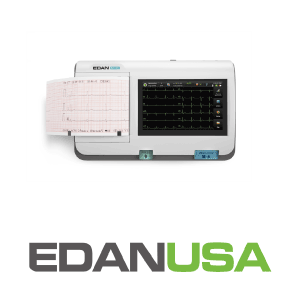
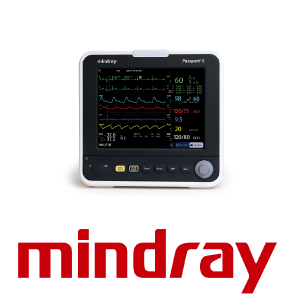
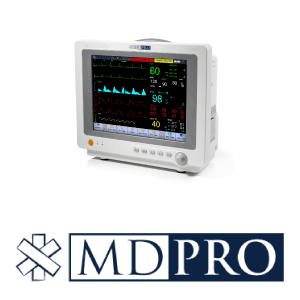
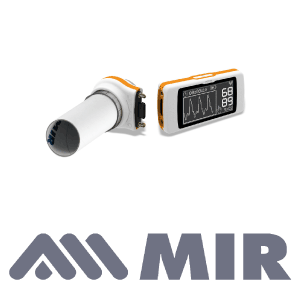
KAKA Medical Technology Co., Ltd. maintains a full spectrum of diagnostic cardiology, patient monitoring, ultrasound, and respiratory devices. Below is a curated look at core diagnostic units distributed globally:
7. Frequently Asked Questions by B2B Procurement Officers
Our digital Holter recorders are engineered with ultra-low power circuitry. Powered by a single standard AAA alkaline or lithium battery, our 3-channel recorders can continuously record ECG data for up to 7 continuous days (168 hours). 12-channel configurations continuously record uncompressed data for 24 to 48 hours. This eliminates battery changeouts mid-study and reduces per-test consumable overhead.
The hardware recorder continuously monitors lead impedance in real-time. If an electrode loses skin contact, a high-frequency warning signal is flagged in the digital record. During analysis, our software uses adaptive baseline filtering and digital notch filters (50/60Hz) to automatically separate muscular artifact (EMG) from true cardiac waveforms, isolating noisy segments so technicians can focus on clean diagnostic data.
Yes. As a master distribution hub, KAKA Medical Technology Co., Ltd. partners with accredited manufacturers to support bulk OEM branding, custom software splash screens, localized user software languages, and custom packaging configurations for qualifying volume distributor orders.
All devices supplied by KAKA Medical Technology Co., Ltd. come standard with a comprehensive manufacturer warranty (typically 24 months on main units, 6 months on accessories). Our USA-based engineering team located in San Diego, CA provides direct phone support, remote software walkthroughs, loaner unit options, and fast-turnaround repair services for all distribution partners.
Unlike vendor models that lock clinics into expensive annual SaaS subscription plans, our software offers perpetual licensing models. Healthcare facilities can install client viewing stations across local clinic networks without incurring per-seat software penalties.
8. Strategic Purchasing Checklist for Hospital RFP Evaluation
Before issuing a Request for Proposal (RFP) or finalizing purchase orders for Digital Holter Monitors, procurement teams should verify that prospective vendors satisfy all technical and commercial criteria listed below:
Partner with KAKA Medical Technology Co., Ltd. Today
Whether you are equipping a multi-specialty cardiology center or seeking master distributor pricing for your medical supply business, our expert team is ready to assist with customized hardware configurations, software demos, and wholesale pricing schedules.
Request B2B Dealer Catalog & Pricing