Executive Information Gain Summary
In an era defined by macro-economic margin compression, strict FDA 21 CFR Part 820 enforcement, and supply chain fragility, medical device procurement is transitioning away from fragmented direct-factory purchases toward Medical Device Master Distribution networks. This whitepaper establishes how centralized master distribution models reduce inventory holding costs by up to 35%, eliminate 510(k) regulatory clearance bottlenecks for sub-dealers, and unlock immediate clinical CPT revenue channels across multi-specialty diagnostic technologies.
1. Architectural Analysis of Medical Device Master Distribution
The global diagnostic medical device market has historically suffered from structural friction. OEM (Original Equipment Manufacturer) producers excel at research, development, and high-precision production, yet frequently struggle with localized clinical support, post-market surveillance, small-lot warehousing, and multi-channel dealer management. Conversely, local healthcare equipment dealers and regional hospital systems lack the capital reserves and regulatory infrastructure to maintain multi-million-dollar minimum order quantities (MOQs) across dozen separate factories.
Medical Device Master Distribution (MDMD) serves as the critical strategic layer that harmonizes this disconnect. A Master Distributor functions as an authorized primary hub holding exclusive or preferred tier-1 distribution agreements with multiple leading manufacturers. By aggregating demand across global networks, the master distributor absorbs inventory risk, manages compliance verification, and provides direct technical infrastructure to sub-distributors, clinics, and surgical centers.
Economic Mechanics: Master Distribution vs. Direct Sourcing
Procurement executives often evaluate whether direct factory procurement yields superior margins compared to working through a Master Distributor. A holistic total cost of ownership (TCO) analysis reveals that direct factory sourcing carries substantial hidden friction costs:
- Capital Lockup: Factory MOQs require substantial cash commitments in single-product categories, creating severe inventory holding costs and risk of product obsolescence.
- Regulatory & Customs Liabilities: Sourcing direct across international borders exposes purchasing entities to FDA import alerts, customs delays, and complex device registration audits.
- Technical Service Overhead: Factories rarely provide localized, 24/7 biomedical engineering support, leaving sub-dealers or clinics to handle warranty claims, spare parts inventory, and firmware updates independently.
Through over 17 years of specialized industry experience, KAKA Medical Technology Co., Ltd. mitigates these inefficiencies. By consolidating over 15 world-class diagnostic brands into a unified logistics catalog, sub-dealers gain tier-1 pricing without factory MOQ penalties, backed by USA-based biomedical support and pre-shipment quality assurance.
2. Regulatory Integrity: FDA 510(k), ISO 13485 & Quality Management Systems
Regulatory non-compliance is the single greatest operational threat facing healthcare equipment distributors today. In the United States, medical diagnostic equipment classified under Class I and Class II must conform strictly to FDA 21 CFR Part 820 Quality System Regulations (QSR), Unique Device Identification (UDI) tracking mandates, and pre-market notification clearances [510(k)].
A premier Medical Device Master Distributor acts as a regulatory firewall. At KAKA Medical Technology Co., Ltd., regulatory verification is embedded into every tier of our master distribution protocol:
Regulatory Verification Protocol at KAKA Medical Technology Co., Ltd.
Every serial-numbered device entering our distribution pipeline undergoes 5-point verification: (1) Validated FDA 510(k) clearance documentation, (2) ISO 13485 certified manufacturing audit, (3) UDI barcode assignment & GUDID registry synchronization, (4) Electrical safety testing (IEC 60601-1), and (5) Firmware validation for cyber-secure EMR/EHR data transmission.
For sub-distributors and private hospital networks, partnering with an established master distributor eliminates the liability of handling unverified grey-market equipment. It guarantees that every resting ECG, patient monitor, or diagnostic ultrasound shipped to a healthcare site carries fully traceable regulatory lineage, protecting institutional risk profiles during joint commission and health department audits.
3. Multi-Brand Diagnostic Device Ecosystem & Technical Specifications
A major strategic advantage of Master Distribution is the ability to provision integrated diagnostic suites spanning multiple clinical specialties from a single purchase order. Rather than managing fragmented vendor contracts, healthcare buyers leverage KAKA Medical Technology Co., Ltd. to source complete diagnostic environments.
| Clinical Specialty | Diagnostic Category | Partner Brands | Core Technical Features & EMR Compliance |
|---|---|---|---|
| Cardiology | Multi-Channel ECG / EKG | Mindray, Edan, MDPro | 12-Lead diagnostic analysis, Glasgow algorithm, touch-screen UI, DICOM / HL7 output |
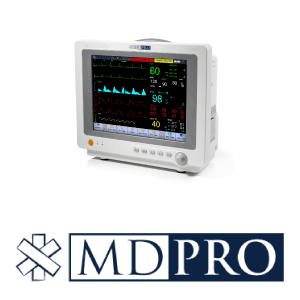
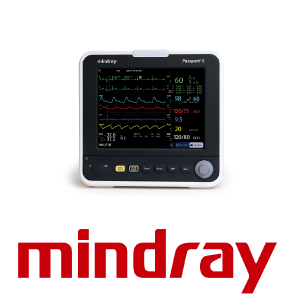
| Critical Care / OR | Bedside Patient Monitors | Mindray, MDPro | Multi-parameter (SpO₂, NIBP, ECG, Temp, Capnography), modular expansion, Wi-Fi networking |
| Obstetrics / Gynecology | Fetal CTG & Colposcopes | Edan, MDPro, Caresono | Dual-fetal heart monitoring, high-sensitivity Doppler, digital video colposcopy with green filter |
| Imaging & Urology | Ultrasound & Bladder Scanners | Caresono, Mindray | Point-of-care 3D bladder volume calculation, HD abdominal/vascular probe options |
| Pulmonology & Vascular | Spirometers & ABPM / Holter | MIR, Riester, Edan | ATS/ERS 2019 compliance, 24-48 hr continuous ambulatory recording, automated AI analysis |
Deep Technical Deep-Dive: Diagnostic Modalities
A. Multi-Channel 12-Lead EKG Systems
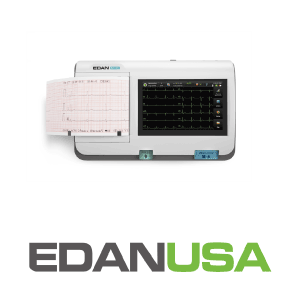
Modern cardiac care requires high-sampling-frequency ECG machines equipped with automated interpretation algorithms. Systems offered through our master distribution catalog feature up to 24,000 Hz signal sampling rates, pacemaker detection algorithms, and native PDF/HL7 integration to seamlessly auto-populate patient charts in Electronic Health Record (EHR) databases.
B. Modular Patient Monitoring Infrastructure
In acute care and surgical environments, bedside monitors must offer dynamic flexibility. Utilizing multi-parameter platforms from industry leaders like Mindray and MDPro, monitors distributed by KAKA Medical Technology support real-time capnography (EtCO₂), invasive blood pressure (IBP), and cardiac output parameters, ensuring scalable deployment from general wards to intensive care units.
C. Portable Bladder Scanners & Point-of-Care Ultrasound
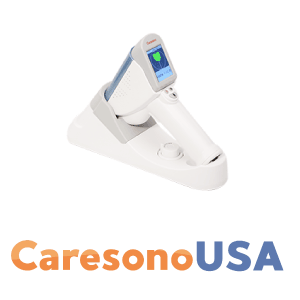
Non-invasive diagnostic imaging has expanded rapidly beyond radiology departments. Automated 3D ultrasound bladder scanners enable nursing staff to measure post-void residual (PVR) volume accurately, reducing catheter-associated urinary tract infections (CAUTIs) by over 40% in clinical ward settings.
4. Financial Engineering: CPT Code Alignment & ROI Optimization
In modern healthcare economics, equipment acquisition is evaluated not merely as a capital expenditure (CapEx), but as an ongoing revenue-generating utility. A superior Medical Device Master Distributor assists healthcare providers and reseller sales forces in understanding how specific diagnostic technologies map directly to Current Procedural Terminology (CPT) reimbursement codes.
CPT Code Revenue Matrix for Diagnostic Equipment
By equipping primary care clinics, cardiology practices, and mobile diagnostic teams with clinical diagnostic equipment, master distribution enables immediate workflow monetization:
- CPT 93000 (12-Lead ECG Routine): Complete ECG with tracing, interpretation, and report. Rapid return on capital investment achieved within 45 to 60 routine patient tests.
- CPT 93784 (Ambulatory Blood Pressure Monitoring - ABPM): 24-hour continuous automated recording, scanning analysis, and physician interpretation. Highly lucrative recurring revenue stream for hypertension management clinics.
- CPT 93224 (Holter Monitor 24-48 Hours): Continuous ECG recording with computer analysis and physician review. Essential for catching transient arrhythmias.
- CPT 94010 (Spirometry Testing): Pulmonary function assessment for asthma and COPD patients using ATS/ERS compliant diagnostic spirometers.
Reseller Advantage: Value-Added Clinical Financial Modeling
Authorized dealers operating under the KAKA Medical Technology Co., Ltd. master distribution network receive custom financial modeling tools. These enable dealer representatives to present prospective clinical buyers with exact pay-back period calculations based on local CPT reimbursement rates and weekly patient volumes.
5. Logistics & Engineering Infrastructure: USA-Based Support Architecture
Supply chain disruption, long factory lead times, and uncoordinated international freight remain major operational vulnerabilities for medical equipment dealers. A core foundational pillar of KAKA Medical Technology Co., Ltd. is our domestic and international warehousing and logistics framework.
Key Operational Pillars of Our Master Distribution Logistics
- Blind Drop-Shipping Capabilities: Sub-distributors can sell directly to end-user clinics without incurring double-freight costs. Orders are white-labeled, drop-shipped directly from our warehouse hubs to the clinician's doorstep, complete with dealer custom packing slips.
- USA-Based Biomedical Engineering Support: Unlike foreign exporters who mandate returning defective equipment overseas for service, KAKA Medical Technology operates factory-certified service centers staffed by senior biomedical engineers. Warranty repairs, board replacements, and calibration are performed domestically.
- Buffer Stocking & Rapid Fulfillment: We maintain extensive buffer inventory across our core 16 product categories—including ECG paper, SpO₂ sensors, patient monitor cuffs, ultrasound probes, and rechargeable lithium-ion battery packs—guaranteeing same-day or next-day order processing.
6. Master Distributor Evaluation Matrix for Procurement Officers
When selecting a long-term master distribution partner, healthcare organizations and commercial equipment resellers must rigorously benchmark prospective partners across technical, financial, and compliance vectors. Use the objective scorecard below to evaluate master distributor viability:
| Evaluation Criteria | Traditional Wholesaler / Importer | KAKA Medical Technology Co., Ltd. |
|---|---|---|
| Brand Portfolio Depth | Limited to 1-2 proprietary or generic labels | 15+ Top-Tier Brands (Mindray, Edan, MIR, Riester, Caresono, MDPro, etc.) |
| Technical & Warranty Support | Outsourced or back-to-factory return (6-12 wks) | In-House Biomedical Engineering (USA support facility, rapid turnaround) |
| Order Minimums (MOQ) | High batch volumes per individual SKU | Flexible Dealer Tiering (Mix-and-match product categories under 1 PO) |
| Regulatory & Compliance Shield | Basic import clearance; sub-dealer assumes liability | Full FDA 510(k), UDI Tracking & QMS Audit Trails provided upfront |
| Drop-Ship Logistics | Rarely supported or exorbitant handling fees | Automated Blind Drop-Shipping with dealer custom paperwork |
7. Deep-Dive B2B Frequently Asked Questions
Below are answers to critical technical, regulatory, and commercial queries frequently raised by executive procurement teams and medical device resellers.
A standard medical supply distributor typically sells directly to end-user clinics and hospitals within a localized region. A Medical Device Master Distributor like KAKA Medical Technology Co., Ltd. sits higher in the supply chain, holding direct tier-1 contract relationships with manufacturers. Master distributors buy in massive global volumes, maintain extensive buffer stock, provide regulatory coverage, and sell primarily to networks of authorized sub-distributors, dealers, and large healthcare systems, offering wholesale margin pricing and logistics infrastructure.
Every diagnostic device distributed by KAKA Medical Technology Co., Ltd. carries fully validated FDA 510(k) clearances or pre-market exemptions under 21 CFR Part 820. Our internal regulatory team maintains strict audit trails, verifies ISO 13485 manufacturing certifications, assigns Unique Device Identifiers (UDI), and ensures full device tracking compliance from factory origin to clinical installation.
Yes. We offer fully integrated, blind drop-shipping services for authorized dealers in our program. Orders are packed, quality-inspected, and shipped directly from our warehouse hubs to the clinician’s facility using custom packing lists bearing the reseller’s logo and business details, eliminating double-freight overhead.
All devices shipped by KAKA Medical Technology Co., Ltd. are backed by our domestic biomedical engineering department. We offer standard manufacturer warranties, extended warranty coverage plans, spare parts supply, loaner device programs, and direct phone/online technical troubleshooting during standard operational hours (8:00 AM – 5:00 PM PST).
Commercial medical equipment companies can apply by contacting our distribution management team via email at [email protected] or submitting an inquiry through our dealer portal page. Applicants undergo brief credentials verification to review commercial licensing and territory scope.