[email protected] Mon – Fri  8:00 AM – 5:00 PM PST
Industry Insights & Knowledge Base

Medical Technology Insights & Clinical Guides

Explore expert articles, diagnostic device guides, and industry news from KAKA Medical Technology Co., Ltd.

Authorized Dealer Program

Latest Trends in Diagnostic Medical Equipment

Stay informed on FDA approvals, technological advancements, and distribution solutions worldwide.

Clinical Resources

Expert Clinical Device & Distribution Guides

Learn how KAKA Medical Technology Co., Ltd. delivers clinically proven diagnostic solutions at global scale.

0%

Choosing among today’s Digital Colposcopes requires more than comparing camera resolution or display size. Global buyers need evidence from real clinical environments. A busy clinic may value rapid imaging, while a teaching hospital may require synchronized video, annotations, and secure case storage. Rural facilities may prioritize durability, battery support, and dependable technical service.

Dr. Edward J. Mayeaux Jr., a respected colposcopy educator, states, “A colposcope supports clinical judgment; it does not replace it.” That principle should guide every purchasing decision. The strongest systems combine clear optical detail, adjustable illumination, comfortable positioning, and intuitive software. They should also support reliable documentation without creating unnecessary workload. A sharp image is useful. A usable workflow matters more.

Buyers should examine training requirements, warranty terms, maintenance access, data protection, and regional regulatory acceptance. Ask suppliers for demonstrations using realistic examination conditions, not only polished showroom images. Check how the device performs with limited space, variable lighting, and long clinical sessions. Artificial intelligence may sound impressive, but its validation and transparency deserve careful questioning. No model is ideal for every market. That is an inconvenient truth. Price can also mislead; a lower initial cost may conceal expensive repairs or weak local support. This guide compares leading Digital Colposcopes through practical performance, clinical suitability, ownership value, and supplier credibility. Some judgments remain subjective. That is worth admitting. Reliable procurement depends on evidence, trained users, and honest evaluation.
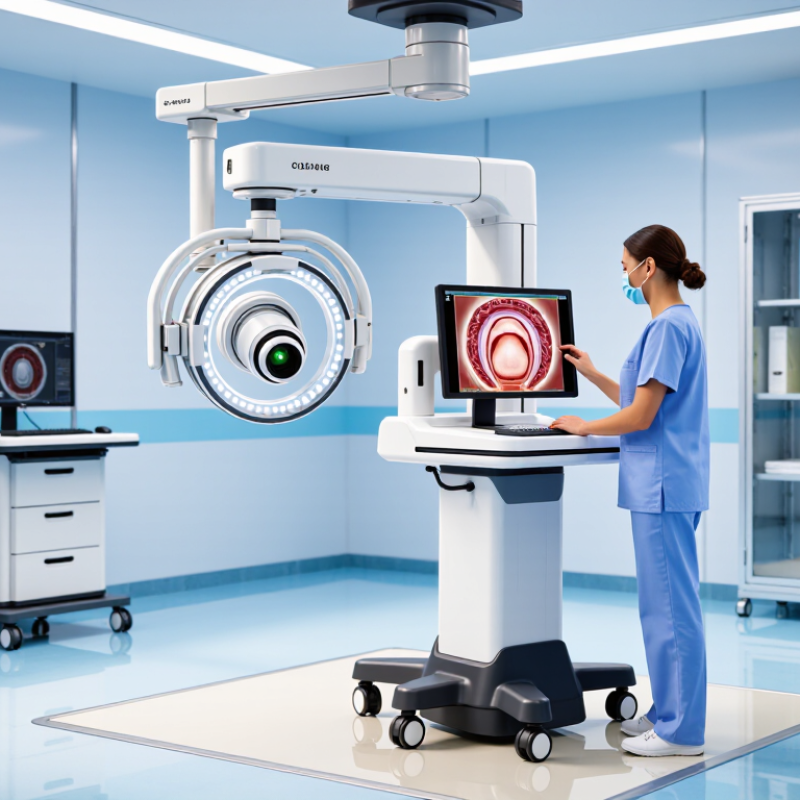
What Are the Top Digital Colposcopes for Global Buyers?

What Is a Digital Colposcope and How Does It Work?

What Are the Top Digital Colposcopes for Global Buyers?

What Is a Digital Colposcope and How Does It Work?

A digital colposcope combines magnification, illumination, and a camera. It displays the cervix on a monitor during examination. The clinician can adjust focus, brightness, and optical zoom. Images and short videos can support documentation and later review.

In daily practice, the device helps clinicians observe acetowhite changes, vascular patterns, and lesion boundaries. It does not replace clinical judgment or biopsy results. A sharp image can still mislead. WHO reported about 660,000 new cervical cancer cases worldwide in 2022, with approximately 350,000 deaths. This burden increases the value of reliable screening equipment. IARC’s Global Cancer Observatory also highlights major differences in cervical cancer outcomes between regions. Therefore, global buyers should assess image quality, ergonomic design, data security, local training, and service availability.

Tips: Test the scope with real clinical workflows, not only a showroom model. Check image performance under uneven lighting. Confirm compatibility with existing monitors and record systems. Ask about calibration, cleaning procedures, and replacement parts. A lower purchase price may create higher maintenance costs. That detail is often overlooked. Buyers should also review independent evaluations, published specifications, and documented user feedback before making a decision.

Which Features Define a High-Quality Digital Colposcope?

What Are the Top Digital Colposcopes for Global Buyers?
A high-quality digital colposcope begins with dependable image quality. IARC’s Global Cancer Observatory estimated about 662,000 new cervical cancer cases worldwide in 2022. It also recorded nearly 349,000 deaths. These figures show why clear visualization matters in routine screening and follow-up care.

The optical system should provide even illumination, adjustable magnification, and stable focus at different working distances. Full HD imaging is useful, but resolution alone cannot guarantee clinical value. Skin tone, glare, motion, and poor positioning can still weaken an image. A practical device should capture still images and video, add annotations, and support calibrated measurements. Simple controls help clinicians work efficiently during examinations.

Data handling is equally important. The WHO cervical cancer elimination strategy targets 90% vaccination, 70% screening, and 90% treatment by 2030. Digital systems can support this pathway through structured records, secure export, and interoperability with hospital software. Encryption, user permissions, audit trails, and reliable backup should be standard features. Infection-control design also matters, especially with smooth surfaces and detachable covers. Remote review may improve access in underserved areas, yet unstable networks can interrupt care. I have seen impressive systems become frustrating because cables, software, or training were overlooked. That weakness deserves more attention.

How Do Leading Digital Colposcope Types Compare?

Global buyers should compare digital colposcope types by clinical purpose, not screen size. Optical digital systems provide detailed images through fixed examination units. They suit hospitals with stable rooms, trained staff, and reliable power. Portable video systems are lighter and easier to move between clinics. Their smaller sensors may reduce image detail in difficult cases. Smartphone-linked devices improve access in rural settings, but lighting and phone compatibility can vary.

AI-assisted colposcopes add automated image analysis and lesion prompts. They may support less experienced clinicians, yet they should not replace clinical judgment. The World Health Organization’s 2021 cervical screening guideline separates screening from diagnostic assessment, making workflow design essential. A colposcope cannot correct weak referral systems. It only magnifies the next decision.

The IARC Global Cancer Observatory estimated about 660,000 new cervical cancer cases and 350,000 deaths worldwide in 2022. This burden makes portability, image storage, and teleconsultation commercially important. Buyers should inspect resolution, latency, biopsy documentation, data encryption, and integration with electronic records. In real clinics, cable length matters. So does cleaning time. WHO’s global strategy targets 70% screening with high-performance tests and 90% treatment of identified disease. Digital colposcopes can support those goals, but evidence remains uneven across device types. A polished demonstration is not enough. Independent validation, local training, and service availability deserve equal weight. Some procurement decisions still overvalue artificial intelligence and undervalue maintenance. That mistake can be expensive.

What Are the Top Digital Colposcopes for Global Buyers? - How Do Leading Digital Colposcope Types Compare?

Typical specifications and purchasing considerations by digital colposcope type
Comparison Dimension Portable USB Digital Colposcope Cart-Based HD Digital Colposcope Smartphone-Compatible Colposcope Telecolposcopy System
Primary design Handheld camera connected to a computer or monitor through USB Integrated examination head, monitor, stand, and mobile cart Optical adapter or camera module used with a smartphone Digital imaging unit combined with secure remote consultation software
Typical optical magnification Approximately 4×–16×, depending on the optical and digital zoom design Approximately 3×–40×, often with selectable magnification levels Usually fixed or limited optical magnification; digital zoom may reduce detail Commonly 4×–30× or higher, depending on the attached imaging platform
Image resolution Commonly HD or Full HD; actual image quality depends on the sensor, optics, and display Often Full HD or higher, with better image stability and presentation on a larger display Dependent on the smartphone camera, adapter alignment, and software processing Typically HD or higher, with image compression and network bandwidth affecting remote viewing
Illumination Integrated white LED illumination; intensity control varies by model High-intensity integrated LED illumination, commonly with adjustable brightness Built-in or accessory LED illumination; lighting uniformity should be checked carefully LED illumination with image capture and sharing capability; configuration varies
Typical field of view Narrow to moderate; suitable for targeted examination and image capture Moderate to wide, with better framing control during a complete examination Varies substantially by adapter and phone camera; edge distortion is possible Depends on the imaging head; should support both overview and magnified views
Portability Very high; convenient for outreach clinics, training, and multiple examination rooms Moderate; mobile within a facility but less convenient for transport between sites Very high; suitable for community programs when compatible devices are available High to moderate; depends on the imaging hardware, connectivity equipment, and power supply
Power requirements Usually USB-powered or powered by a small external adapter Mains electricity is normally required; battery backup is model-dependent Uses the smartphone battery and, in some designs, a separate rechargeable light source Requires power for imaging, networking, and connected computing equipment
Image and video capture Still images and video are commonly available through computer software Still images, video, annotations, and examination records are commonly supported Uses native smartphone photo and video functions or a companion application Designed for capture, storage, and secure transmission for remote review
Documentation and connectivity USB connection; documentation may rely on local computer software Often supports local storage, external displays, electronic records, and network integration Wireless or mobile connectivity is readily available, but data control depends on the application Requires secure data transfer, user authentication, encryption, and reliable internet access
Best-fit use case Primary care, screening programs, education, and budget-sensitive facilities Hospitals, specialist clinics, high-volume services, and comprehensive examinations Low-resource settings, field screening, training, and quick image sharing Referral networks, remote supervision, specialist consultation, and distributed screening
Main advantages Low space requirement, easy transport, relatively simple setup, and lower infrastructure needs Stable positioning, strong ergonomics, consistent illumination, and comprehensive workflow features Low weight, familiar interface, rapid deployment, and use of widely available mobile hardware Extends specialist access and enables centralized review without requiring an expert onsite
Key limitations Handheld motion, limited ergonomics, and dependence on a compatible computer or display Higher purchase cost, larger footprint, and greater requirements for installation and maintenance Variable optical performance, compatibility issues, battery dependence, and cybersecurity concerns Internet dependence, privacy obligations, software interoperability, and the need for trained remote reviewers
Approximate ownership level Low to moderate, excluding computer, software, and service costs Moderate to high, including installation, calibration, service, and accessories Low to moderate, depending on whether a compatible smartphone and software subscription are already available Moderate to high, including hardware, connectivity, secure platform, and clinical support costs
Important buyer checks Sensor resolution, working distance, focus control, software compatibility, and sterilization method Optical quality, stand stability, monitor ergonomics, service availability, electrical compliance, and integration options Phone compatibility, image consistency, app support, data ownership, cleaning procedure, and offline operation Encryption, regulatory compliance, network reliability, latency, consent workflow, audit trails, and interoperability

Note: Specifications are typical market ranges rather than universal requirements. Actual performance varies by configuration, optics, sensor, software, accessories, and local regulatory approvals. Digital colposcopes are intended to support clinical examination and documentation; diagnosis should be made by appropriately trained healthcare professionals.

What Should Global Buyers Check Before Choosing a Model?

What Are the Top Digital Colposcopes for Global Buyers?

Global buyers should assess clinical performance before comparing features. The IARC Global Cancer Observatory reported about 662,000 new cervical cancer cases worldwide in 2022. It also recorded nearly 349,000 deaths. These figures make dependable visualization more important than attractive specifications.

Check image resolution, color accuracy, illumination, and optical zoom under real examination conditions. A sharp image alone is not enough. The system should reveal subtle acetowhite changes without excessive glare. Test it with different skin tones, lighting conditions, and cervical presentations. Ask for measured performance data, not only showroom demonstrations. I would not trust a perfect demo image.

Workflow matters too. The operator should adjust focus and magnification quickly, while keeping both hands available. Confirm whether recordings include timestamps, patient identifiers, and exportable reports. Secure data storage and role-based access are essential. Compatibility with existing hospital systems can prevent expensive disruption. In remote or rural clinics, check battery backup, dust resistance, network independence, and local service capacity.

Safety and quality documents deserve careful review. Relevant benchmarks may include IEC 60601-1 for electrical safety, ISO 14971 for risk management, and ISO 13485 for quality systems. The WHO cervical cancer elimination strategy targets screening coverage of 70% with a high-performance test by ages 35 and 45. A colposcope supports that pathway, but does not replace clinical judgment or screening tests. Training requirements are often underestimated. That is a weakness worth admitting. A reliable model is one clinicians can use consistently, maintain locally, and interpret responsibly.

How Can Buyers Evaluate Suppliers, Compliance, and Long-Term Support?

For global buyers, the top digital colposcopes are not defined by image resolution alone. They combine clear optics, stable illumination, ergonomic handling, and dependable clinical software. IARC’s Global Cancer Observatory estimated 662,301 new cervical cancer cases and 348,874 deaths worldwide in 2022. That burden makes reliable screening equipment a practical priority.

Supplier evaluation should begin with evidence, not demonstrations. Request the exact regulatory pathway, product classification, electrical safety testing, and ISO 13485 certification scope. ISO 14971 risk-management records and IEC 62304 software documentation also deserve review. A certificate may cover a factory, not every supplier claim. Check whether the device supports secure data export, local language interfaces, patient-privacy controls, and integration with existing records. Ask for real installation references in similar clinics. Small details matter.

Long-term support is easier to test before purchase. Require written calibration intervals, spare-parts availability, software-update policies, and response times for critical faults. The supplier should provide practical training, including image capture under poor lighting and difficult patient positioning. WHO’s 2021 cervical screening guideline emphasizes quality-assured pathways, not isolated devices. This is where many evaluations become optimistic. Buyers should compare total ownership costs over five years, including service visits and downtime. A lower purchase price can age badly. Get the promises in writing.

The WHO 90–70–90 targets provide a practical benchmark for evaluating digital colposcope suppliers. Buyers should prioritize systems that support high-quality screening, standardized imaging, clinical documentation, interoperability, staff training, regulatory compliance, cybersecurity, preventive maintenance, and long-term technical support.

Source: World Health Organization, Global strategy to accelerate the elimination of cervical cancer as a public health problem.

FAQS

What is a digital colposcope?

A digital colposcope combines magnification, illumination, and a camera. It displays cervical images on a monitor. Clinicians can adjust focus, brightness, and optical zoom. Images and short videos support documentation. Clear images help, but they do not replace clinical judgment or biopsy results.

What clinical details can a digital colposcope show?

It can show acetowhite changes, vascular patterns, and lesion boundaries. Uneven lighting may hide important details. Test image quality near edges and difficult angles. A sharp picture can still mislead.

Which digital colposcope type suits a busy hospital?

Fixed optical systems suit hospitals with stable rooms and trained staff. They usually provide detailed images and steady operation. Portable systems support clinics with changing locations. Smartphone-linked devices may improve rural access, but compatibility can vary.

Can an AI-assisted colposcope replace an experienced clinician?

No. Automated analysis may highlight image areas or suggest lesions. It should support decisions, not make them independently. Clinical judgment remains necessary. I may overvalue software if maintenance needs are ignored.

What image and workflow features should buyers test?

Test resolution, focus speed, brightness control, image delay, and video stability. Use real clinical workflows, not only showroom demonstrations. Check cables, patient positioning, and cleaning time. Small details become daily problems.

How should buyers evaluate data security and system compatibility?

Confirm secure data export, patient-privacy controls, and access permissions. Check compatibility with existing monitors and electronic records. Ask about encryption and local language interfaces. A beautiful image is useless if records cannot be transferred safely.

What supplier documents should global buyers request?

Request regulatory pathway details, product classification, and electrical safety testing. Review quality-management certification and software risk records. Confirm which products and facilities each certificate covers. A certificate may not support every sales claim.

How can buyers estimate long-term ownership costs?

Compare purchase price, calibration, service visits, spare parts, software updates, and downtime. Request written response times for critical faults. Ask for five-year cost estimates. A cheaper device can age badly. That deserves honest reflection.

What training and support should suppliers provide?

Suppliers should train staff to capture images under poor lighting and difficult positioning. They should explain cleaning, calibration, and routine troubleshooting. Ask for local service contacts and replacement-part timelines. Promises should be written.

Conclusion

This guide explains what Digital Colposcopes are, how their optical systems, cameras, illumination, and imaging software support cervical examinations, and which features distinguish a high-quality model. It reviews key considerations such as image clarity, magnification, recording capability, ergonomic design, portability, ease of sterilization, software usability, and compatibility with clinical workflows. By understanding these fundamentals, global buyers can compare different device types and identify solutions that match their intended environment, budget, and examination needs.

The article also outlines a practical purchasing process. Buyers should assess image performance, connectivity, training requirements, maintenance needs, warranty coverage, spare parts availability, and total ownership costs. Supplier evaluation is equally important, including manufacturing consistency, product documentation, quality management, regulatory compliance in the target market, technical support, and long-term service capacity. A careful comparison of specifications, supplier reliability, and after-sales resources can help healthcare organizations select a dependable digital colposcopy solution with sustainable value.

Charlotte

Charlotte

Charlotte is a dedicated marketing professional with a profound understanding of the company’s core offerings. Her expertise in the industry not only drives effective marketing strategies but also ensures that the company remains at the forefront of innovation. With a strong commitment to......