Capnography Monitors are becoming essential tools for continuous respiratory assessment in operating rooms, intensive care units, ambulances, and procedural sedation. They display end-tidal carbon dioxide, respiratory rate, and waveform changes in real time. A stable waveform can support faster clinical decisions, while a sudden loss may signal apnea, disconnection, or airway displacement.
Industry forecasts show continued expansion. Grand View Research identifies rising demand for respiratory monitoring and anesthesia equipment as major market drivers. MarketsandMarkets also projects growth in the global capnography market, supported by surgical procedures, emergency care, and remote monitoring. However, reported market values differ considerably between analysts. That variation deserves caution.
China has developed a broad medical-device manufacturing base, ranging from established exporters to specialized monitoring companies. This guide reviews ten Chinese Capnography Monitors manufacturers through practical criteria, including product scope, regulatory documentation, clinical application, sensor technology, waveform visibility, alarm design, and after-sales support. ISO 80601-2-55 is especially relevant because it addresses respiratory gas monitoring equipment requirements. FDA databases, CE documentation, and NMPA registration records can offer useful verification, but paperwork alone does not prove bedside reliability.
Real performance matters.
A monitor should respond clearly beside a ventilator, during patient transport, and under motion or moisture. Some manufacturers communicate impressive specifications, yet independent clinical evidence may remain limited. That is an important weakness, not a minor detail. Buyers should compare calibration procedures, sampling-line durability, battery performance, service response, and local training before selecting a supplier. This ranking is therefore intended as a practical starting point, not a final purchasing decision.
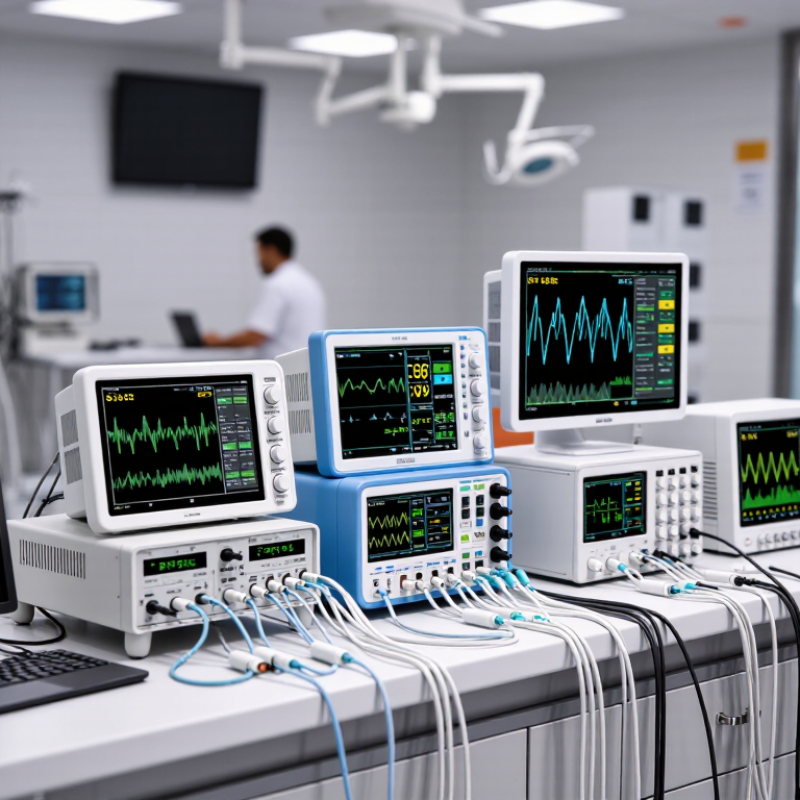
Capnography Fundamentals: EtCO₂, FiCO₂, Respiratory Rate, and Waveforms
Capnography monitors display ventilation in real time, not merely oxygenation. EtCO₂ is the final carbon dioxide level measured at the end of exhalation. In healthy adults, clinical references commonly place it near 35–45 mmHg. The American Society of Anesthesiologists requires continuous exhaled carbon dioxide monitoring during anesthesia, when clinically appropriate. A rising EtCO₂ may indicate hypoventilation, increased metabolism, or rebreathing. A sudden fall can signal disconnection, apnea, or poor circulation.
FiCO₂ should remain close to zero after adequate exhalation. Detectable FiCO₂ may suggest exhausted absorbent, valve failure, or insufficient fresh-gas flow. Respiratory rate comes from repeated waveform cycles, so motion and weak breaths can distort the number. The AARC clinical practice guidance supports waveform capnography during mechanical ventilation, while Respiratory Care reviews emphasize waveform shape, not EtCO₂ alone. A square plateau usually reflects stable exhalation. A sloping “shark-fin” pattern may indicate airway obstruction or bronchospasm. It is easy to overtrust one number. I would check the patient, tubing, sampling line, and waveform together. Small leaks matter. Calibration and alarm limits also deserve regular review.
China Top 10 Capnography Monitors Manufacturers? - Capnography Fundamentals: EtCO₂, FiCO₂, Respiratory Rate, and Waveforms
| Parameter / Feature | Technical Definition | Common Unit | Typical Adult Reference or Pattern | Clinical Interpretation | Important Measurement Considerations |
|---|---|---|---|---|---|
| 1. EtCO₂ | End-tidal carbon dioxide: the CO₂ concentration or partial pressure measured at the end of exhalation. | mmHg or kPa; % volume may also be displayed | Approximately 35–45 mmHg in many healthy adults; commonly equivalent to about 4.7–6.0 kPa. | Provides information about alveolar ventilation and, when interpreted with arterial data, ventilation–perfusion status. | Readings may be affected by leaks, shallow breathing, airway obstruction, low cardiac output, or poor sampling. |
| 2. FiCO₂ | Fractional inspired CO₂: the CO₂ level detected in inspired gas before or during the inspiratory phase. | mmHg, kPa, or % volume | Normally close to zero in a well-functioning breathing circuit and adequately flushed environment. | An elevated value may indicate rebreathing, exhausted absorbent, inadequate fresh-gas flow, or circuit-related problems. | Interpret alongside the capnogram, circuit configuration, sampling-line condition, and ventilator settings. |
| 3. Respiratory Rate | The number of detected respiratory cycles per minute, usually calculated from the CO₂ waveform. | breaths/min | Approximately 12–20 breaths/min for a resting adult, with clinical context required. | Supports assessment of tachypnea, bradypnea, apnea, sedation, ventilation, and respiratory pattern changes. | Motion, irregular breathing, cardiogenic oscillations, leaks, and low tidal volume can cause inaccurate rate detection. |
| 4. Capnogram Waveform | A continuous graph showing CO₂ concentration or partial pressure against time during inspiration and expiration. | CO₂ versus time | A normal waveform has a near-zero inspiratory baseline, a rapid expiratory upstroke, an alveolar plateau, and a sharp inspiratory downstroke. | Trend and shape changes can reveal airway obstruction, leaks, rebreathing, hypoventilation, or disconnection. | Waveform interpretation should be continuous and combined with patient assessment and other monitored variables. |
| 5. Phase I: Inspiratory Baseline | The portion of the waveform representing inspired gas, normally containing minimal CO₂. | CO₂ versus time | Usually returns close to zero between breaths. | A persistently elevated baseline suggests inspired CO₂ or rebreathing. | Check valves, absorbent, fresh-gas flow, circuit configuration, and calibration when the baseline remains elevated. |
| 6. Phase II: Expiratory Upstroke | The rapid increase in measured CO₂ as conducting-airway gas mixes with alveolar gas. | CO₂ versus time | Normally steep and relatively rapid. | A slanted or prolonged upstroke may be associated with expiratory airflow obstruction or uneven emptying. | The pattern is not diagnostic by itself and must be correlated with airway resistance, flow, and patient condition. |
| 7. Phase III: Alveolar Plateau | The late-expiratory segment representing gas from progressively emptying alveoli; the end of this phase provides EtCO₂. | CO₂ versus time | Generally near-horizontal, with EtCO₂ measured at the terminal point. | A rising or sharply sloped plateau can suggest heterogeneous ventilation or obstructive physiology. | Insufficient expiratory time or low exhaled volume may prevent a reliable plateau from forming. |
| 8. Phase 0: Inspiratory Downstroke | The rapid fall in CO₂ at the beginning of inspiration as fresh gas enters the airway. | CO₂ versus time | Normally descends quickly toward the inspiratory baseline. | A delayed or incomplete fall may indicate rebreathing, valve malfunction, or an obstructed expiratory pathway. | Verify the sampling path and breathing circuit before attributing the pattern solely to the patient. |
| 9. Sampling Technology | The method used to analyze exhaled gas, commonly mainstream or sidestream capnography. | Not applicable | Mainstream sensors measure near the airway; sidestream systems aspirate gas through a sampling line. | Technology influences response time, sensor placement, dead space, portability, and suitability for different patients. | Sidestream systems require attention to water traps, sampling-line occlusion, flow rate, and transport delay. |
| 10. Alarm and Trend Functions | Software functions that identify limit violations, apnea, signal loss, and changes in EtCO₂, FiCO₂, or respiratory rate. | Numeric limits, seconds, and trend intervals | Thresholds should be configured for the patient, care setting, ventilation mode, and local clinical protocol. | Trends can help identify gradual hypoventilation, recovery, worsening obstruction, or equipment problems. | Alarm limits are not universal; avoid relying on alarms without checking the patient and the complete waveform. |
FAQS
It covers respiratory gas monitoring safety and performance. Key areas include carbon dioxide accuracy, alarms, response time, leakage, and sampling safety.
Request traceable test records, calibration evidence, risk-management files, and batch-testing results. Documents should match the exact model.
Delayed sampling may hide sudden hypoventilation. A smooth display is not proof of immediate clinical response.
Check low, normal, and elevated carbon dioxide levels. Compare readings with a calibrated reference device during changing breathing patterns.
Test apnea, disconnected lines, sudden waveform loss, and adjustable high or low limits. Check whether tones remain clear during a night shift.
No. Response time, airway design, and sampling-line length also affect results. Faster is not automatically better.
Temperature, humidity, pressure, movement, and oxygen changes may influence readings. Condensation can distort sidestream measurements in humid wards.
Confirm stable Ethernet, Wi-Fi, USB, or serial communication. Data exports should include waveforms, timestamps, alarm events, and patient identifiers.
Use clinical performance, quality controls, regulatory readiness, service capacity, and user feedback. Evidence matters more than production claims.
No. A certificate supports compliance, but it cannot represent every field condition. Some files explain laboratory accuracy better than bedside limitations. That gap deserves review.
Conclusion
This article provides a practical overview of China’s top 10 Capnography Monitors manufacturers, beginning with the fundamentals of capnography. It explains the clinical importance of end-tidal carbon dioxide (EtCO₂), inspired carbon dioxide (FiCO₂), respiratory rate, and waveform interpretation in respiratory monitoring. It also introduces the main safety and performance considerations outlined in ISO 80601-2-55:2018 for respiratory gas monitoring devices.
The ranking is based on five evidence-based criteria, including technical capability, product reliability, certification, clinical validation, and market performance. A product comparison examines measurement accuracy, sampling rate, alarm functions, user interface, and connectivity with hospital information systems. The article also considers export reach, regulatory readiness, technical documentation, training, warranty policies, and after-sales support, helping readers make a balanced and informed evaluation of Chinese manufacturers for hospitals, emergency care, anesthesia, and critical care applications.