[email protected] Mon – Fri  8:00 AM – 5:00 PM PST
Industry Insights & Knowledge Base

Medical Technology Insights & Clinical Guides

Explore expert articles, diagnostic device guides, and industry news from KAKA Medical Technology Co., Ltd.

Authorized Dealer Program

Latest Trends in Diagnostic Medical Equipment

Stay informed on FDA approvals, technological advancements, and distribution solutions worldwide.

Clinical Resources

Expert Clinical Device & Distribution Guides

Learn how KAKA Medical Technology Co., Ltd. delivers clinically proven diagnostic solutions at global scale.

0%

Choosing Medical Pulse Oximeters for global markets requires more than comparing screen size, price, or shipping speed. A device may look reliable under bright showroom lights yet produce unstable readings on a cold finger. Buyers must examine accuracy, sensor design, alarm performance, usability, and evidence from real clinical settings.

Grand View Research estimates that the global pulse oximeters market was valued at approximately USD 2.7 billion in 2023, with continued growth expected through the decade. This expansion reflects wider home monitoring, hospital procurement, and remote-care demand. However, market growth does not guarantee equal product quality. The World Health Organization’s Technical Specifications for Pulse Oximetry stresses dependable performance, clear instructions, and suitability for oxygen-monitoring workflows. FDA safety communications also warn that factors such as skin pigmentation, poor circulation, motion, and incorrect sensor placement can affect readings.

Small details matter.

A global buyer should request independent validation, calibration information, ISO 80601-2-61 conformity, electrical safety documentation, and region-specific registration evidence. Review performance across different skin tones and oxygen ranges. Check whether replacement probes are available locally. A low-cost unit becomes expensive when its sensor fails after three months.

John W. Severinghaus, a pioneer in clinical monitoring, famously described pulse oximetry as “the most important new development in patient monitoring since the electrocardiogram.” His observation remains relevant, but modern buyers should question every claim. No device is perfect. The strongest purchasing decision combines expert evidence, transparent testing, clinician feedback, and practical experience from the intended market.
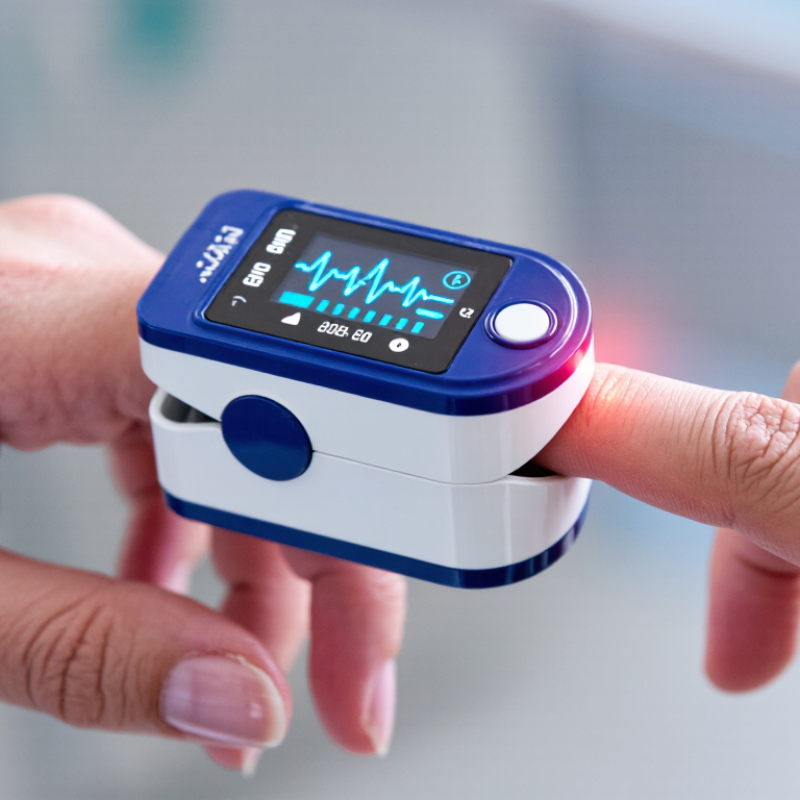
How to Choose Medical Pulse Oximeters for Global Buyers?

Understanding Medical Pulse Oximeter Types and Measurement Principles

Medical pulse oximeters estimate oxygen saturation without drawing blood. Understanding their design helps global buyers choose more responsibly.

A fingertip model uses red and infrared light through a finger. Oxygenated and deoxygenated hemoglobin absorb these wavelengths differently. A photodetector captures the changing light signal. The device then calculates SpO2 and pulse rate from the pulsating blood flow. Simple and portable.

Handheld models usually support interchangeable probes. They suit clinics, ambulances, and pediatric assessments. Bedside systems often provide larger displays, alarms, and continuous monitoring.

Reflectance models measure light returning from the skin, rather than passing through tissue. They can support forehead or wrist measurements, but placement becomes critical.

In practical checks, cold fingers, weak circulation, movement, nail coverings, and bright light can distort readings. Skin pigmentation may also affect performance in some devices, especially when oxygen levels are low.

A displayed number is not a diagnosis. It needs clinical context.

Buyers should review validation data, accuracy across skin tones, operating altitude, battery behavior, and probe compatibility. Independent testing and recognized regulatory documentation matter more than attractive specifications.

Check the small details.

Does the screen remain readable in sunlight? Can staff clean the probe safely? Are replacement sensors available locally?

A global purchaser should also consider language settings, power adapters, training materials, and local medical-device requirements.

No model performs perfectly. Even experienced users can trust a stable-looking reading too quickly. Cross-check unexpected results with the patient’s condition and an approved clinical method.

Defining Clinical Requirements and Intended Use Cases

How to Choose Medical Pulse Oximeters for Global Buyers?

Defining Clinical Requirements and Intended Use Cases

Choosing a medical pulse oximeter should begin with the patient, not the catalogue. Define where readings will occur: intensive care, ambulances, clinics, or homes. Each setting creates different demands for accuracy, durability, portability, and cleaning. A bedside unit may need continuous monitoring and visible alarms. A home device may require simple controls and clear instructions.

Consider the users and patient groups carefully. Adult fingers differ from neonatal feet and pediatric hands. Cold skin, movement, low perfusion, nail coatings, and poor circulation can affect readings. Ask whether the device has been tested under these conditions. Check its stated oxygen saturation range, pulse-rate range, response time, and accuracy specifications. Do not treat marketing language as clinical evidence.

The operating environment also matters. Emergency teams may need battery life, shock resistance, and readable displays in bright light. Hospitals may require data transfer, alarm management, and documented cleaning procedures. Buyers should review clinical validation, user training, quality-system evidence, and applicable regulatory requirements in each target market. Independent evaluation is valuable when available. We sometimes overvalue a low purchase price. That choice can create higher training and replacement costs later. No device performs perfectly. A careful buyer records its limitations before approving widespread use. That record supports safer decisions, even when the procurement process feels rushed.

Evaluating Accuracy, Reliability, and Essential Safety Features

How to Choose Medical Pulse Oximeters for Global Buyers?

Accuracy and reliability should guide every purchase. A 2021 New England Journal of Medicine study found occult hypoxemia in 11.7% of Black patients, compared with 3.6% of white patients. This finding deserves attention. Buyers should request validation data across skin tones, ages, and oxygen levels. Testing should compare readings with arterial reference measurements, especially between 70% and 100% saturation. ISO 80601-2-61 provides a useful technical benchmark for pulse oximeter performance. Do not trust a large display alone.

Reliability appears during difficult measurements. Cold fingers, movement, poor circulation, and nail coatings can produce unstable readings. Look for low-perfusion performance, motion tolerance, clear alarm limits, and battery status indicators. A readable screen helps during dim nighttime checks. Data storage and export functions may support clinical review, but they also require secure handling. The FDA warns that pulse oximeters should not be used alone to judge a patient’s condition. Symptoms still matter. This is easy to forget.

Tips: Ask for independent test reports, calibration records, and user instructions in your market’s language. Check performance after repeated cleaning. Test the device on warm and cool fingers. Compare readings with a trusted clinical monitor when possible. If values jump without a clear reason, investigate rather than accepting the number.

Comparing Certifications, Usability, Connectivity, and Maintenance

How to Choose Medical Pulse Oximeters for Global Buyers?

Certification should match the destination market, not merely the supplier’s brochure. Check device registration, electrical safety testing, and quality-management evidence. ISO 13485 supports manufacturing controls, while IEC 60601-1 addresses essential electrical safety. ISO 80601-2-61 is more specific to pulse oximeter performance. Ask for current certificates, test reports, and the exact model number. Documents can be outdated. That risk is easy to miss.

In clinical use, verify accuracy across different skin tones, ages, motion levels, and low-perfusion conditions. A device may perform well in a quiet laboratory but struggle with cold fingers or patient movement. I would test it beside a trusted reference monitor before approving large purchases.

Usability affects every reading. Select clear displays, adjustable alarms, bilingual instructions, and suitable adult, pediatric, or infant sensors. Large buttons help during night shifts or emergency transport. Connectivity should fit the existing workflow. Bluetooth, USB, or network integration may reduce manual charting, but wireless features need access controls and dependable offline operation. Do not assume every hospital has stable internet.

Maintenance deserves equal attention. Review battery replacement intervals, cleaning instructions, sensor durability, calibration requirements, and local repair support. Keep spare probes available. A low purchase price becomes expensive when one damaged cable stops daily monitoring. My own selection process would include staff trials, maintenance records, and a six-month review, because initial impressions are sometimes misleading.

Selecting Suppliers, Reviewing Costs, and Planning Global Procurement

How to Choose Medical Pulse Oximeters for Global Buyers?

Selecting suppliers requires more than comparing catalogue prices. Request evidence of quality management, product testing, calibration procedures, and traceability. A supplier should explain how each unit is inspected before shipment. Ask for performance data across different skin tones, motion conditions, and oxygen levels. These details reveal practical competence. They also support responsible purchasing decisions.

Review the total cost, not only the quoted unit price. Include batteries, sensors, packaging, freight, import duties, training, replacement parts, and warranty handling. A cheap device can become expensive when readings are inconsistent or service is slow. Check minimum order quantities and payment terms carefully. Cash flow matters. One overlooked cost can disrupt an entire delivery plan.

Global procurement needs a realistic schedule. Confirm production capacity, inspection dates, shipping routes, and local documentation requirements. Verify that the device meets applicable medical-device rules in each destination market. Do not accept vague certificates. Ask for current, product-specific records. A supplier may be experienced, yet still unsuitable for every region. This is where buyers should pause and reassess assumptions. Forecast demand with a safety margin, but avoid excessive stock with aging batteries. Small pilot orders can expose packaging damage, user confusion, or weak after-sales support before a large commitment.

How to Choose Medical Pulse Oximeters for Global Buyers? - Selecting Suppliers, Reviewing Costs, and Planning Global Procurement
Evaluation Dimension Practical Benchmark or Typical Data How to Verify Before Purchase Global Procurement Implication
Clinical Measurement
SpO₂ measurement range
Common operating range: 70%–100% SpO₂. Review the technical specification, performance test report, and accuracy data across the stated range. For general screening, 70%–100% is widely used; buyers should not treat readings outside the declared range as clinically validated.
Clinical Measurement
SpO₂ accuracy
Many medical devices specify approximately ±2 percentage points from 70% to 100% under stated test conditions. Request the approved accuracy specification and the corresponding controlled desaturation or equivalent validation report. Compare accuracy claims only when the measurement range, population, sensor type, and test method are equivalent.
Clinical Measurement
Pulse-rate range
Typical pulse-rate range: 30–250 beats per minute, depending on device design. Confirm the operating range, resolution, accuracy, and performance during motion or low-perfusion conditions. Hospital, ambulance, and sports-use requirements may differ; select the range according to the intended patient population.
Performance
Low perfusion and motion tolerance
Performance can decline with cold fingers, poor circulation, movement, nail coatings, skin pigmentation differences, or weak pulse signals. Request test evidence for low perfusion, motion, different skin tones, and multiple sensor placement conditions. For emergency or transport use, these tests are more important than display features or cosmetic design.
Alarm and Display
Display and alarm functions
Preferred functions may include SpO₂, pulse rate, pulse waveform or signal-quality indicator, adjustable limits, and visual or audible alarms. Review the user interface, alarm priority, alarm silence behavior, screen readability, and language options. Home-use devices should emphasize simplicity; clinical devices require clearer alarm management and status indication.
Regulatory
Core electrical-safety standards
Commonly reviewed standards include IEC 60601-1 for basic safety and essential performance and IEC 60601-1-2 for electromagnetic compatibility. Check the current edition stated in the test reports and confirm that the tested model, accessories, and power configuration match the offered product. Standards evidence supports market access but does not automatically replace the destination country’s registration requirements.
Regulatory
Pulse-oximeter-specific compliance
IEC 80601-2-61 is the commonly referenced particular standard for pulse oximeter equipment. Request the full test report or certificate package, including scope, model number, sensor configuration, and validity information. Use the destination authority’s classification and registration rules as the final compliance checklist.
Biocompatibility
Patient-contact materials
Reusable clip sensors and disposable accessories should be assessed according to the duration and type of patient contact. Review applicable ISO 10993 biological-evaluation evidence, material declarations, cleaning instructions, and skin-contact warnings. Material documentation is especially important when importing devices for hospitals, long-term care, or pediatric use.
Power Supply
Battery and charging configuration
Portable units commonly use replaceable or rechargeable batteries; operating time varies widely by display brightness, alarm use, and battery capacity. Verify battery type, rated capacity, charging time, operating time, replacement availability, and transport documentation for lithium batteries. Choose replaceable batteries where field serviceability is more important than charging convenience.
Durability
Ingress and environmental protection
Protection levels vary by model; basic fingertip units may have limited water resistance, while clinical or transport models may provide higher protection. Confirm the declared IP rating, operating temperature, storage temperature, humidity range, drop testing, and cleaning compatibility. Do not infer water resistance from marketing language; match the protection level to ambulance, ward, home, or outdoor use.
Supplier Qualification
Quality-management system
A supplier serving regulated markets should be able to provide a quality-management certificate, production records, complaint handling, and change-control procedures. Check certificate scope, validity, manufacturing site, audit history, traceability process, and corrective-action records. Supplier quality documentation reduces the risk of inconsistent batches and unsupported regulatory claims.
Supplier Qualification
Sample and pre-shipment inspection
A practical purchasing process normally includes technical sample approval, pilot-batch inspection, and random final inspection before shipment. Define acceptance criteria for accuracy, display, alarms, accessories, packaging, labeling, and serial-number traceability in the purchase contract. Written acceptance criteria are more enforceable than general statements such as “medical grade” or “high quality.”
Cost Planning
Indicative unit-price bands
Typical bulk-market planning ranges, excluding freight, taxes, registration, and customization:
Basic fingertip: US$8–25
Enhanced handheld: US$25–90
Bedside or advanced clinical: US$90–300+
Obtain comparable quotations using the same quantity, sensor type, accessories, certification package, packaging, warranty, and delivery term. Very low prices may exclude regulatory documentation, calibration evidence, spare parts, or after-sales support.
Cost Planning
Customization charges
Common cost items include logo or label setup, multilingual packaging, software changes, special colors, molds, validation, and additional testing. Request a separate quotation for one-time engineering fees, minimum order quantity, artwork approval, sample charges, and recurring per-unit costs. Standard products usually provide faster delivery and lower qualification risk than heavily customized products.
Logistics
Lead-time planning
Indicative planning windows: 2–6 weeks for standard stock or repeat orders and 6–16 weeks or more for customization, testing, or registration-dependent projects. Confirm production capacity, component availability, inspection date, shipping date, and contingency time in writing. Maintain safety stock for regulatory approvals, seasonal demand, port delays, and replacement requirements.
Logistics
Packaging and labeling
Packaging should protect the sensor and screen from shock, moisture, electrostatic discharge, and compression during transport. Approve carton dimensions, drop-test expectations, lot or serial labeling, instruction language, electrical ratings, and country-specific markings. Incorrect labels or missing local-language instructions can delay customs clearance or market release.
Commercial Terms
Warranty and after-sales service
A common commercial benchmark is a 12–24 month limited warranty, subject to exclusions and local service arrangements. Confirm response time, replacement policy, repair process, spare-part availability, calibration support, and warranty start date. For institutional procurement, service capability can have a greater total-cost impact than the initial unit price.
Total Cost of Ownership
Five-year procurement cost
Include device price, sensors, batteries, chargers, calibration, inspection, freight, duties, registration, training, warranty handling, and disposal. Compare at least three scenarios: lowest purchase price, balanced compliance, and highest serviceability. The lowest quotation is not necessarily the lowest total cost when failure rates, consumables, or regulatory rework are included.
Procurement Decision
Recommended scoring model
Example weighting: clinical performance 30%, regulatory evidence 20%, supplier quality 15%, total cost 15%, delivery capability 10%, service and warranty 10%. Score each supplier using the same evidence-based checklist and document any unverified claims as open risks. Adjust the weighting for the application: emergency care prioritizes performance and robustness, while home screening may prioritize usability and cost.
Risk Control
Red flags requiring clarification
Examples include unsupported accuracy claims, inconsistent model numbers, missing test reports, unclear factory location, unusually low pricing, and refusal to provide samples. Pause approval until the supplier provides traceable documents, consistent specifications, and a satisfactory sample evaluation. Documented verification protects buyers from counterfeit, misclassified, or non-compliant medical devices.

FAQS

How does a fingertip pulse oximeter estimate oxygen saturation?

It sends red and infrared light through a finger. Hemoglobin absorbs each wavelength differently. A sensor measures changing light signals from pulsating blood. The device estimates oxygen saturation and pulse rate. It does not draw blood.

Which pulse oximeter type suits clinics and transport?

Fingertip models are portable and simple for routine checks. Handheld models use interchangeable probes for clinics and ambulances. Bedside systems offer larger displays, alarms, and continuous monitoring. Choose sensors for adults, children, or infants. The workflow matters more than appearance.

What can cause an inaccurate pulse oximeter reading?

Cold fingers, weak circulation, movement, and bright light can distort results. Nail coverings may also interfere with light transmission. Poor placement creates avoidable errors. Warm the hand and keep it still. Check the patient, not only the screen.

Can skin pigmentation affect pulse oximeter performance?

Some devices may perform differently across skin tones, especially at low oxygen levels. Request validation data covering varied skin tones and clinical conditions. Independent testing is useful. Do not assume equal performance without evidence.

What should global buyers check before purchasing?

Confirm destination-market registration and current product-specific documents. Review electrical safety, quality controls, and performance testing. Check the exact model number on every certificate. Documents can become outdated. That risk is easy to miss.

How should buyers evaluate usability and connectivity?

Select readable screens, large buttons, adjustable alarms, and clear instructions. Test visibility under bright sunlight and during night shifts. Connectivity may reduce manual charting. However, wireless functions need access controls and offline operation. Not every clinic has stable internet.

What maintenance details deserve attention?

Review battery life, replacement intervals, cleaning methods, and probe durability. Confirm local repair support and replacement-sensor availability. Keep spare probes ready. One damaged cable can stop daily monitoring. Low price is not always low cost.

How can buyers reduce procurement risks?

Start with a small pilot order before committing to large quantities. Test packaging, staff understanding, reading stability, and after-sales response. Include freight, duties, training, batteries, sensors, and warranty handling in cost estimates. Maintain a safety margin, but avoid excessive stock. Aging batteries are easy to overlook.

Conclusion

Choosing Medical Pulse Oximeters for global procurement requires a clear understanding of device types, measurement principles, and intended clinical applications. Buyers should first determine whether the equipment is needed for hospitals, outpatient care, emergency services, home monitoring, or specialized environments. Key evaluation criteria include oxygen saturation and pulse-rate accuracy, performance across different patient conditions, alarm functions, durability, battery life, and user safety. Devices should also be assessed for ease of operation, display readability, data storage, connectivity, cleaning requirements, and long-term maintenance.

A responsible purchasing process should include reviewing applicable certifications, quality documentation, warranty terms, technical support, and supplier reliability. Buyers should compare total ownership costs rather than focusing only on the initial price, considering accessories, replacement sensors, calibration, training, shipping, and after-sales service. By matching product capabilities with clinical needs and planning logistics carefully, global buyers can select dependable pulse oximeters that support efficient patient monitoring and sustainable healthcare operations.

Oliver

Oliver

Oliver is a dedicated marketing professional with a deep expertise in our company’s product offerings. His passion for marketing is matched only by his commitment to sharing valuable insights with our audience. As a key contributor to our professional blog, Oliver consistently produces engaging and......