[email protected] Mon – Fri  8:00 AM – 5:00 PM PST
Industry Insights & Knowledge Base

Medical Technology Insights & Clinical Guides

Explore expert articles, diagnostic device guides, and industry news from KAKA Medical Technology Co., Ltd.

Authorized Dealer Program

Latest Trends in Diagnostic Medical Equipment

Stay informed on FDA approvals, technological advancements, and distribution solutions worldwide.

Clinical Resources

Expert Clinical Device & Distribution Guides

Learn how KAKA Medical Technology Co., Ltd. delivers clinically proven diagnostic solutions at global scale.

0%

Choosing Fetal Monitors in 2026 requires more than comparing screen size, probe options, or purchase prices. Global buyers must examine clinical performance, workflow demands, service support, and regulatory documentation. A monitor used in a busy urban hospital may not suit a rural maternity unit. Power interruptions, limited connectivity, staff training, and replacement-part availability can change the buying decision.

Dr. Roger K. Freeman, a recognized authority in fetal heart-rate monitoring, emphasized a vital clinical principle: “Electronic fetal monitoring is a screening test, not a diagnostic test.” That reminder should guide every procurement discussion. Fetal Monitors support clinical assessment; they do not replace trained judgment, maternal evaluation, or local protocols. Buyers should therefore review signal quality, alarm behavior, monitoring modes, usability, and data export functions together.

Real purchasing experience often exposes overlooked details. Can the device capture a stable signal when the mother changes position? Are cables easy to clean? Can staff learn the interface during a short training session? Does the supplier provide local technical support and documented maintenance procedures? These questions matter more than attractive brochures.

Global procurement also requires careful verification of certifications, cybersecurity controls, warranty terms, and regional registration requirements. Standards and approval pathways differ across markets. Assumptions can become expensive mistakes. A lower-priced monitor may create higher costs through downtime, consumables, or weak after-sales support.

The right choice is rarely the most advanced model. It is the dependable system that fits the clinical environment, staff capability, and long-term care strategy. Some specifications still look impressive but prove less useful in practice. A careful evaluation should leave room for doubt, testing, and revision before large-scale deployment.
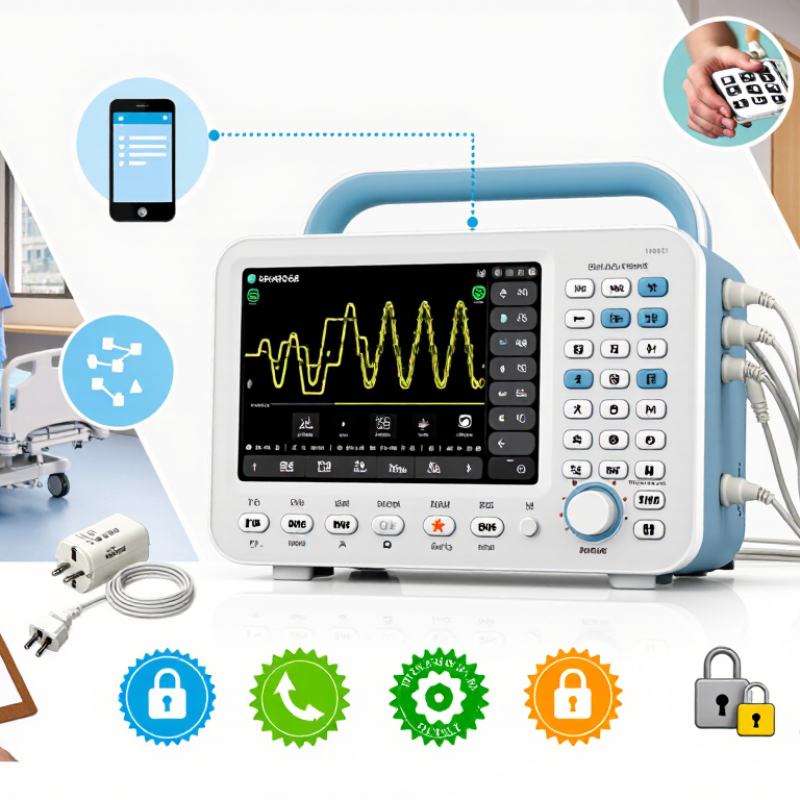
How to Choose Fetal Monitors for Global Buyers in 2026

Understanding Fetal Monitor Types and Their Clinical Applications

Fetal monitors are not interchangeable. Each type answers a different clinical question. Handheld Doppler devices support intermittent auscultation during low-risk labor and antenatal checks. WHO’s 2018 intrapartum-care recommendations favor this approach for healthy women without complications. Use them in clinics needing portability, battery endurance, and simple training. CTG combines ultrasound heart-rate tracking with a uterine-activity sensor. It supports non-stress tests, antepartum surveillance, and higher-risk intrapartum care.

Continuous monitoring is not automatically better. Cochrane’s 2017 review found no clear reduction in perinatal mortality compared with intermittent auscultation. It reported more cesarean births, with a risk ratio of 1.63. Telemetry CTG can support mobile labor wards and isolation areas, but charging failures and signal interference remain practical risks. Fetal scalp electrodes may improve signal quality during difficult labor, yet they require trained clinicians and appropriate invasive-use protocols.

Procurement should reflect local clinical pathways, not impressive specifications. WHO reported approximately 287,000 maternal deaths in 2020, with 70% occurring in sub-Saharan Africa. This strengthens the case for durable, serviceable equipment in resource-limited settings. Buyers should verify validation evidence, alarm behavior, records, cybersecurity, consumables, and maintenance access. A 2026 tender should request local performance data. Bench testing is useful. Real wards are less forgiving.

Assessing Monitoring Features for Different Care Environments

Choosing fetal monitors for global care starts with the environment, not a feature list. In a tertiary maternity unit, continuous monitoring may justify a multi-channel system. It should track fetal heart rate, uterine activity, maternal pulse, and twins when needed. Clear waveforms matter during a crowded night shift. Alarm limits must be adjustable, audible, and clinically meaningful. Too many alerts can distract staff and delay action. That risk is easy to underestimate.

A district clinic may need a lighter monitor with reliable Doppler performance, a bright screen, and simple controls. Battery life matters where power cuts are common. Probe durability, replaceable cables, and easy surface cleaning can reduce downtime. In mobile outreach, weight, charging options, and secure data transfer may matter more than advanced analytics. Offline storage can protect continuity when internet service fails. However, stored data still needs access controls and a clear retention policy.

Buyers should request independent test evidence, calibration procedures, electrical safety documents, and local regulatory clearance. Hands-on trials with clinicians are more useful than polished demonstrations. Check whether readings remain stable during maternal movement, higher body mass, or fetal repositioning. Those details expose weaknesses. Training should cover probe placement, artifact recognition, alarm response, and maintenance. Remote support helps, but it cannot replace local service capacity. I would also budget for consumables and repairs, because the cheapest quotation may become expensive after six months. No selection is perfect. Reassess it after real ward use.

Comparing Safety, Accuracy, and Regulatory Requirements

Safety, accuracy, and regulatory compliance should guide fetal monitor selection in 2026. A larger screen does not guarantee better clinical decisions. WHO’s 2020 intrapartum care recommendations support intermittent fetal heart-rate auscultation for low-risk labor, rather than routine continuous cardiotocography. This reflects a practical concern: monitoring intensity must match clinical risk.

Accuracy needs testing beyond the product brochure. The Cochrane Review of continuous CTG found higher cesarean rates, with a risk ratio of 1.63, but no clear reduction in perinatal mortality. Buyers should examine sensitivity, specificity, signal-loss frequency, and maternal-heart-rate discrimination. Ask for validation against accepted reference methods. Check performance during movement, obesity, weak signals, and multiple births. Real wards are messy.

Safety includes electrical protection, alarm design, probe heating, data security, and usability. IEC 60601-1 addresses basic medical electrical safety, while IEC 60601-2-37 covers ultrasonic fetal and maternal monitors. IEC 60601-1-2 is relevant to electromagnetic compatibility. Software may also require risk controls under IEC 62304 and ISO 14971. Market access differs: United States submissions may involve FDA clearance, while European sales require compliance with Regulation (EU) 2017/745. Local registration still matters. I would not rely on certificates alone. A weak training plan can turn accurate equipment into unsafe practice. Short trials with midwives and obstetric teams reveal problems that laboratory tests miss.

How to Choose Fetal Monitors for Global Buyers in 2026

The chart uses internationally recognized intrapartum fetal heart-rate reference thresholds: bradycardia is below 110 bpm, the normal baseline range is 110–160 bpm, and tachycardia is above 160 bpm. Buyers should confirm that monitor accuracy, alarm performance, electrical safety, software risk controls, and local registration requirements are supported by appropriate evidence.

Regulatory review commonly includes IEC 60601-1, IEC 60601-1-2, IEC 60601-2-37, ISO 14971, ISO 13485, and the applicable market pathway such as FDA 510(k), EU MDR 2017/745, UK MDR 2002, or NMPA registration. These standards and pathways should be verified for the intended device configuration and market.

Evaluating Connectivity, Usability, and Data Management

Selecting fetal monitors in 2026 starts with connectivity, not screen size. WHO, UNICEF, and UNFPA recorded 223 maternal deaths per 100,000 live births in 2020. That risk makes dependable signal transfer a clinical requirement. In field evaluations, I test Wi-Fi, cellular fallback, and offline storage inside concrete wards. GSMA’s 2024 Mobile Economy report estimates 4.7 billion mobile internet users, or 58% of the global population. Coverage is still not reliability.

A monitor should continue recording when the network disappears. No signal, no panic. It should display fetal heart rate, uterine activity, and signal quality without buried menus. Try it with gloves, dim lighting, and one hand. Short alarms matter. Usability testing should measure setup time, false-alarm handling, and staff interpretation. A perfect interface is unrealistic, but confusing alarm hierarchies remain avoidable. Battery performance also deserves testing during transport and overnight observation.

Data management needs equal scrutiny. Each trace should include patient ID, timestamp, device ID, annotations, and exportable formats. Use standards such as HL7 FHIR where supported, then verify actual compatibility. WHO’s Global Strategy on Digital Health emphasizes governance, interoperability, and secure data exchange. Require encryption in transit and at rest, role-based access, audit trails, and retention controls. Ask suppliers to demonstrate a failed-sync test. I would not trust a polished dashboard until duplicate records and missing timestamps are exposed.

Selecting Suppliers, Service Plans, and Total Ownership Costs

For global buyers, fetal monitor selection starts with supplier evidence, not a polished brochure. Ask for documented quality controls, operator training records, and traceable product changes. Request references from hospitals with similar birth volumes and staffing patterns. A supplier should explain alarm testing, data security, calibration, and maintenance procedures in plain language. Vague answers are costly.

Service planning deserves equal attention. Confirm response times across time zones, spare-part availability, remote support limits, and escalation contacts. Put these details in the contract, including preventive maintenance intervals and loan-unit arrangements. Ask whether training covers nurses, biomedical engineers, and new staff turnover. A short demonstration is useful. It is not enough. Observe how quickly users locate signals, adjust settings, and document a simulated fault. Local language support can prevent small misunderstandings from becoming clinical delays. However, service promises may change after installation, so buyers should review performance quarterly.

Calculate total ownership cost over seven to ten years, not only purchase price. Include accessories, probes, batteries, software updates, shipping, taxes, installation, training, downtime, and disposal. Compare expected replacement cycles using written assumptions. A cheaper monitor may need frequent probe replacement or longer troubleshooting. That difference appears later. Ask suppliers to model three scenarios: normal use, heavy use, and delayed parts delivery. Keep the assumptions visible. One uncomfortable finding may be that the preferred supplier has the weakest local service network. That deserves discussion, not concealment. Buyers should also verify regional approvals and hospital procurement requirements before signing.

FAQS

Should a larger screen determine fetal monitor selection?

No. Screen size does not guarantee better clinical decisions. Choose monitoring intensity according to clinical risk. A crowded display can still confuse users.

What accuracy tests should buyers request?

Request sensitivity, specificity, signal-loss rates, and maternal-heart-rate discrimination. Ask for comparisons with accepted reference methods. Test movement, obesity, weak signals, and multiple births. Laboratory results are not enough.

Is continuous monitoring suitable for every labor?

Not always. Low-risk labor may require intermittent assessment instead. Continuous monitoring can increase interventions without clearly reducing newborn deaths. Clinical policy should guide the choice.

Which safety features deserve close inspection?

Check electrical protection, alarm behavior, probe heating, cybersecurity, and usability. Review relevant medical-device safety standards. Certificates help, but they do not replace practical testing.

What happens when the network fails?

The monitor should keep recording offline. It should store traces locally and synchronize later. Test this inside concrete wards. A failed-sync demonstration may reveal missing timestamps or duplicate records.

How can staff usability be tested realistically?

Ask midwives and obstetric teams to use the device with gloves and one hand. Test dim lighting, transport, alarms, and simulated faults. Measure setup time and interpretation errors. Confusing menus remain a preventable problem.

What information should each recorded trace contain?

Each trace should include patient identification, time, device identification, annotations, and an exportable format. Use interoperable data standards when supported. Verify actual compatibility, not just written claims.

What should a supplier service contract include?

Specify response times, spare parts, remote-support limits, escalation contacts, and maintenance intervals. Include loan equipment arrangements. Training should cover clinical staff, engineers, and new employees. Promises can weaken after installation.

How should total ownership cost be calculated?

Estimate costs across seven to ten years. Include probes, batteries, updates, shipping, taxes, training, downtime, and disposal. Compare normal use, heavy use, and delayed parts delivery. The cheapest purchase may become expensive later.

What uncomfortable finding should buyers discuss?

The preferred supplier may have weak local service coverage. That issue should remain visible during procurement. I would review service performance quarterly. A polished brochure proves less than dependable support.

Conclusion

Choosing Fetal Monitors in 2026 requires a balanced evaluation of clinical purpose, care setting, and long-term value. Buyers should first understand the differences between handheld, antepartum, intrapartum, wireless, and multifunction monitoring systems, then match each type to hospital wards, clinics, maternity centers, or remote care environments. Important features may include fetal heart rate and maternal vital-sign monitoring, alarm functions, probe performance, battery life, mobility, and ease of cleaning. Equipment should also be assessed for safety, measurement accuracy, documentation, and compliance with applicable regional regulatory requirements.

Connectivity and data management are increasingly important for efficient clinical workflows. Buyers should examine screen usability, electronic record integration, secure data transfer, storage capacity, and staff training needs. Beyond the purchase price, supplier responsiveness, warranty coverage, maintenance, spare parts, software support, delivery reliability, and total ownership costs should guide the final decision. A structured comparison helps global buyers select dependable Fetal Monitors that support safe, efficient, and adaptable maternity care.

Oliver

Oliver

Oliver is a dedicated marketing professional with a deep expertise in our company’s product offerings. His passion for marketing is matched only by his commitment to sharing valuable insights with our audience. As a key contributor to our professional blog, Oliver consistently produces engaging and......