Medical Technology Insights & Clinical Guides
Explore expert articles, diagnostic device guides, and industry news from KAKA Medical Technology Co., Ltd.
Latest Trends in Diagnostic Medical Equipment
Stay informed on FDA approvals, technological advancements, and distribution solutions worldwide.
Expert Clinical Device & Distribution Guides
Learn how KAKA Medical Technology Co., Ltd. delivers clinically proven diagnostic solutions at global scale.
What Are the 2026 Best Digital Holter Monitors?
Table of Contents
- What Is a Digital Holter Monitor and How Does It Work?
- Which Features Define the Best Digital Holter Monitors in 2026?
- How to Compare Recording Quality, Comfort, and Battery Life
- What Heart Conditions Can Digital Holter Monitors Help Detect?
- How to Choose the Right Digital Holter Monitor for Clinical Use
- FAQS
- Conclusion
- Related Posts
Choosing the 2026 best Digital Holter Monitors requires more than comparing screen size, recording time, or marketing claims. A reliable monitor should capture clear ambulatory ECG data during ordinary movement, sleep, work, and exercise. It should also support practical clinical decisions, from detecting intermittent arrhythmias to reviewing unexplained palpitations.
Real-world performance matters. A patient may wear the device beneath a shirt for several days, while electrodes face sweat, friction, and accidental movement. Comfortable materials can improve adherence. Stable signal quality can reduce noisy recordings and unnecessary repeat tests. Clinicians should examine sampling performance, lead configuration, battery life, storage capacity, and software reporting tools. Data encryption and controlled access also deserve close attention.
Not every advanced feature improves care.
Artificial intelligence may help prioritize suspicious segments, but trained professionals must verify important findings. Automated interpretation can miss context, especially when motion artifacts resemble abnormal rhythms. Independent validation, transparent manufacturer information, regulatory status, and responsive technical support strengthen confidence. Cost and workflow compatibility matter too, particularly for clinics managing large patient volumes.
This guide compares leading Digital Holter Monitors through a practical, evidence-aware lens. It considers comfort, accuracy, usability, connectivity, and post-test reporting. No device is perfect. The strongest choice depends on patient needs, clinical setting, and the quality of follow-up review. Manufacturers continue improving these systems, yet careful judgment remains essential.
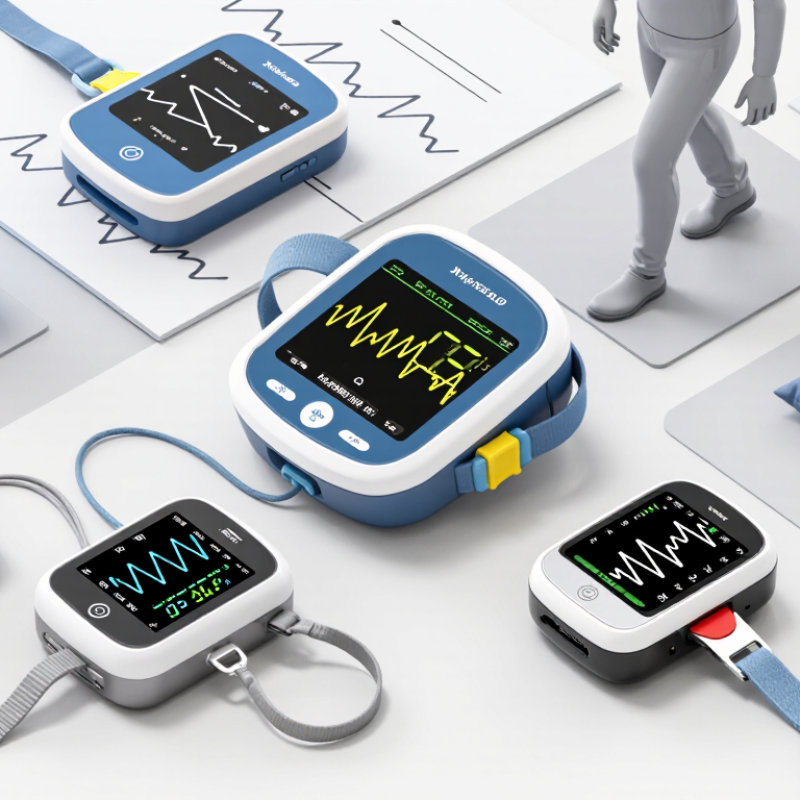
What Is a Digital Holter Monitor and How Does It Work?
A digital Holter monitor is a small ambulatory ECG system worn during normal daily activity. It records the heart’s electrical signals through adhesive electrodes placed across the chest. The recorder stores each beat, including episodes that may never appear during a short clinic ECG.
Most devices capture continuous data for 24 to 48 hours, while newer systems may support longer monitoring. Their software can flag pauses, fast rhythms, irregular beats, and possible atrial fibrillation. However, an algorithm only identifies patterns. A qualified clinician must review the original tracing and compare it with symptoms, activity, and medication history. That distinction matters.
The World Health Organization reports that cardiovascular disease caused about 17.9 million deaths in 2019, representing 32% of global deaths. This helps explain the growing interest in accessible rhythm monitoring. The 2023 ESC Guidelines support ambulatory ECG monitoring when symptoms are intermittent or difficult to capture in a clinic. Longer recording can improve detection, but it may also create more noise and false alerts. No device is magic. Skin irritation, loose electrodes, motion, and poor contact can distort results. I have seen convenience become overconfidence; digital data still needs clinical judgment. When comparing 2026 models, examine signal quality, recording duration, water resistance, data security, reporting speed, and clinician oversight. Fancy dashboards are helpful, but trustworthy recordings matter more.
What Are the 2026 Best Digital Holter Monitors?
Typical recording durations for digital ambulatory ECG monitors
Digital Holter monitors continuously record ECG signals while a person performs normal daily activities. Traditional Holter monitoring commonly lasts 24–48 hours, while extended ambulatory ECG systems may record for several days or weeks. The appropriate duration depends on how often symptoms occur and the clinician’s monitoring plan; longer recording does not automatically mean better diagnostic performance.
Which Features Define the Best Digital Holter Monitors in 2026?
The best digital Holter monitors in 2026 should capture reliable ECG data during ordinary life. Patients may walk, sleep, work, and climb stairs while wearing the device. A comfortable patch, secure electrodes, and low skin irritation matter greatly. Small design details affect recording quality.
Strong systems usually offer multi-channel ECG recording, high sampling accuracy, and effective motion-noise reduction. They should preserve clear waveforms during movement, not simply produce attractive reports. Long battery life and sufficient storage reduce interruptions. Real-time transmission can help clinicians review urgent rhythm changes, but it also depends on stable connectivity. A failed signal is still a clinical problem.
Software should support fast review, searchable event markers, and transparent algorithm alerts. Automated detection may identify pauses, ectopic beats, or possible atrial fibrillation. However, algorithms can misread muscle noise or poor electrode contact. Human interpretation remains essential. Data encryption, controlled access, and audit trails support responsible clinical use. Compatibility with established medical records can reduce repeated data entry. I would also examine the patient instructions closely. Confusing instructions can damage an otherwise excellent recording. Not every impressive feature improves diagnosis, and longer monitoring may sometimes create more questionable alerts rather than clearer evidence.
| Evaluation Dimension | Recommended 2026 Benchmark | Typical Clinical Value | Why It Defines a Strong Digital Holter Monitor | What to Verify Before Purchase |
|---|---|---|---|---|
| Recording Duration | 24–48 hours for routine Holter testing; 7–14 days for infrequent symptoms | Captures transient arrhythmias that may not appear during a short clinical ECG | Longer monitoring improves the likelihood of correlating palpitations, dizziness, syncope, or asymptomatic rhythm events with ECG data | Confirm whether the device supports continuous recording for the stated duration and whether the battery and memory are replaceable or rechargeable |
| ECG Channel Configuration | At least 3 channels for conventional Holter use; multi-lead options for broader diagnostic needs | Provides more information about rhythm morphology and supports beat classification | Additional channels can help distinguish artifact from cardiac signals and improve analysis of complex arrhythmias | Check the number of simultaneous channels, electrode configuration, and compatibility with the intended clinical workflow |
| Sampling Rate | 250–500 samples per second per channel for routine monitoring; higher rates may support detailed morphology analysis | Determines how precisely the system records rapid changes in the ECG waveform | A suitable sampling rate preserves QRS and other waveform details without creating unnecessarily large files | Confirm the sampling rate per channel, stored resolution, and whether the published value applies to raw data or displayed data |
| Signal Resolution | At least 10-bit digital resolution; 12-bit resolution is preferable for detailed ECG analysis | Improves representation of small voltage differences in the ECG signal | Higher resolution can support more reliable waveform review, especially when signal amplitude is low | Review analog-to-digital conversion specifications and verify that the full-resolution signal is retained for analysis |
| Noise and Motion Handling | Baseline-wander reduction, power-line interference filtering, electrode-off detection, and artifact marking | Reduces false events and makes long recordings easier to interpret | Effective artifact management is essential because patient movement, loose electrodes, and muscle activity can distort ECG recordings | Check whether filters are configurable and whether the original unfiltered signal remains available for clinician review |
| Arrhythmia Detection | Automated detection of pauses, bradycardia, tachycardia, atrial fibrillation or irregular rhythm, and ventricular ectopy | Prioritizes potentially important sections of lengthy recordings | Automation can reduce review time, but it should support rather than replace professional interpretation | Verify the event categories, adjustable thresholds, false-positive controls, and clinician confirmation workflow |
| Event Marking | Patient event button or symptom diary with time-stamped annotations | Links symptoms and daily activities to the corresponding ECG segment | Time correlation helps determine whether reported symptoms are associated with an arrhythmia or occur during normal rhythm | Check whether event markers are stored in the recording and whether patients can enter symptom descriptions |
| Data Storage | Sufficient internal memory for the complete recording at the selected channel count and sampling rate | Prevents gaps caused by storage limits during extended monitoring | Reliable storage protects the continuity and clinical usefulness of the recording | Confirm storage capacity, overwrite behavior, file format, and whether raw ECG data can be exported |
| Data Transfer | Secure USB or wireless transfer with encrypted data handling and clear export options | Speeds analysis and supports integration with clinical information systems | Fast, dependable transfer reduces manual handling and lowers the risk of missing or corrupted recordings | Review supported file formats, encryption, transfer logs, offline operation, and compatibility with existing ECG software |
| Analysis Software | Interactive ECG review, beat-by-beat editing, trend graphs, event strips, and customizable reports | Supports efficient review of heart rate, rhythm, pauses, ectopic beats, and symptom events | Good software is as important as the recorder because clinical decisions depend on clear visualization and editable analysis | Check reporting templates, audit trails, user permissions, search tools, and the ability to manually validate automated findings |
| Heart-Rate Trends | Continuous trend display with minimum, maximum, average, and time-based heart-rate information | Shows rate changes across sleep, activity, and symptomatic periods | Trend analysis provides context that may be missed when reviewing isolated ECG strips | Confirm trend resolution, event correlation, and whether the displayed calculations can be traced back to raw ECG segments |
| Patient Comfort | Lightweight recorder, secure cable or patch design, low-profile electrodes, and skin-friendly materials | Improves adherence during sleep, work, exercise, and daily activities | A comfortable device is more likely to be worn for the full prescribed period, reducing incomplete studies | Review device weight, dimensions, lead flexibility, electrode options, replacement frequency, and patient instructions |
| Battery Performance | Battery life exceeding the intended recording period with a clear low-battery warning | Maintains continuous ECG acquisition throughout the test | Unexpected power loss can create clinically significant gaps and require the study to be repeated | Verify battery type, rated recording time under normal operating conditions, charging time, and replacement procedures |
| Protection Against Daily Conditions | Secure enclosure and documented resistance to routine sweat, splashes, and handling; do not assume full waterproofing | Reduces failures during ordinary patient activity | Appropriate environmental protection helps preserve signal quality and device reliability during extended use | Check the official ingress-protection rating, permitted activities, cleaning method, and restrictions on bathing or swimming |
| Data Security and Privacy | User authentication, encryption in storage and transfer, role-based access, and secure deletion procedures | Protects identifiable patient ECG data | Digital recordings contain sensitive health information and require controlled access throughout the device and software lifecycle | Review cybersecurity documentation, software update policy, access logs, cloud-storage practices, and local regulatory compliance |
| Clinical Validation | Documented performance testing, clear intended-use claims, and regulatory authorization in the target market | Supports confidence that the system performs as intended for its stated use | Independent evidence and appropriate authorization are more meaningful than feature counts alone | Request validation data, intended-use documentation, applicable regulatory status, and post-market safety information |
| Workflow Efficiency | Quick patient setup, guided recording initiation, automatic quality checks, and streamlined report review | Reduces staff time and lowers the risk of setup or labeling errors | Efficient workflows allow more studies to be processed while maintaining consistent quality | Evaluate setup time, staff training requirements, device assignment, study-status tracking, and report approval steps |
| Best Overall Selection Principle | Reliable signalComplete dataUsable softwareSecure workflow | Balances diagnostic quality, patient adherence, and operational cost | The best digital Holter monitor is not necessarily the one with the most features; it is the system that consistently produces interpretable data for its intended patient population | Compare the complete recording ecosystem: recorder, electrodes, software, accessories, training, support, data security, and total cost of ownership |
How to Compare Recording Quality, Comfort, and Battery Life
What Are the 2026 Best Digital Holter Monitors?
How to Compare Recording Quality, Comfort, and Battery Life
The best digital Holter monitor is not always the one with the longest feature list. Recording quality should come first. Look for clear signal capture, reliable electrode contact, accurate timestamps, and visible alerts for noise or lead loss. A strong device should preserve useful data during walking, sleeping, and ordinary household movement. Still, no monitor removes every artifact. Poor skin preparation can distort an otherwise excellent recording.
Comfort affects the quality of real-world evidence. A lightweight recorder, flexible cables, and gentle adhesive may help patients complete the full monitoring period. Ask whether the patient can sleep comfortably and maintain normal clothing choices. Battery life also requires careful comparison. Check the stated operating time under active use, not only laboratory conditions. Memory capacity, low-battery warnings, and safe data transfer matter too. Small details can prevent missing hours of rhythm data.
Tips: Prepare the skin carefully, secure loose cables, and record symptoms with exact times. Test the device before the patient leaves. Review battery status midway through longer monitoring periods. Do not judge performance from one attractive tracing; compare signal stability across movement and rest. Personal comfort is subjective, so patient feedback should influence the final choice.
What Heart Conditions Can Digital Holter Monitors Help Detect?
Digital Holter monitors help clinicians investigate irregular heart rhythms during ordinary daily life. Unlike a brief clinic ECG, they may record continuously for 24 hours or longer. This longer view can reveal atrial fibrillation, atrial flutter, rapid heart rhythms, slow heart rates, pauses, and frequent extra beats. These findings may explain palpitations, dizziness, fainting, unusual fatigue, or unexplained weakness.
They can also help detect intermittent conduction problems, including episodes linked with heart block. Some recordings show rhythm changes during exercise, sleep, stress, or after a reported symptom. The patient’s event notes matter. A timestamp beside “chest fluttering” may help a clinician compare symptoms with the recorded rhythm. Timing matters. Digital analysis can highlight suspicious patterns, but a qualified professional must review the original tracing and clinical history.
A Holter monitor does not diagnose every heart condition. It cannot reliably rule out coronary artery disease, valve problems, or structural abnormalities. A normal result may simply mean the episode did not occur during monitoring. That limitation is easy to forget. Longer monitoring may be more suitable when symptoms happen weekly or monthly. People should seek urgent medical care for severe chest pressure, fainting, or serious breathing difficulty, rather than waiting for a monitor report. The most useful interpretation combines the recording, symptom diary, medications, and other tests.
How to Choose the Right Digital Holter Monitor for Clinical Use
What Are the 2026 Best Digital Holter Monitors?
Choosing the right digital Holter monitor starts with clinical purpose, not a feature list. A device for routine 24-hour screening may differ from one used for seven-day symptom correlation. Define the recording period, patient group, and expected arrhythmia burden before comparing models. A monitor should capture reliable signals during walking, sleeping, and ordinary movement. Comfort matters.
Look for validated ECG performance, stable electrodes, clear lead configuration, and strong artifact control. Check whether the monitor supports continuous recording or event-triggered review. Battery life should exceed the planned study period, with a practical safety margin.
Data storage and secure transfer also deserve close attention. Data gaps happen. Ask how the system identifies missing segments, corrupted files, or poor electrode contact.
Clinical workflow can determine real value. The software should present trends, pauses, ectopic beats, and suspected rhythm events in a readable format. Automated analysis may save time, but qualified professionals must verify every meaningful finding. Review the device’s regulatory status in your region, cybersecurity controls, cleaning instructions, and staff training requirements. Patient feedback is useful too; a bulky recorder or irritating cable can reduce adherence. No device is perfect. In practice, the best choice may be the monitor your team can apply correctly, review consistently, and support when an unexpected recording problem appears.
FAQS
It is a small ambulatory ECG device worn during normal daily activities. Adhesive electrodes record the heart’s electrical signals. It may capture irregular rhythms missed by a short clinic ECG.
Many devices record continuously for 24 to 48 hours. Some systems support longer monitoring periods. Longer recording can reveal intermittent symptoms, but it may also create more signal noise.
Software may flag pauses, fast rhythms, irregular beats, and possible atrial fibrillation. These are alerts, not final diagnoses. A qualified clinician must review the original ECG tracing.
No. Algorithms identify patterns only. Clinicians should compare findings with symptoms, activity, and medication history. A dashboard can look impressive. It can still mislead.
Clean and dry the skin before applying electrodes. Secure loose cables carefully. Avoid pulling the wires during sleep or dressing. Record symptoms with exact times. Small details matter.
Yes. Walking, household activity, and loose electrodes can create artifacts. Poor skin contact may distort the signal. Compare recordings during movement and rest, not from one attractive tracing.
Compare signal quality, recording duration, comfort, battery life, memory, and data transfer. Check timestamps and low-battery warnings. Water resistance and cleaning instructions may also matter.
A lightweight recorder may support better daily use. Flexible cables and gentle adhesive can reduce irritation. Patients should sleep comfortably and maintain ordinary clothing choices. Comfort is subjective.
Readable reports should show trends, pauses, ectopic beats, and suspected rhythm events. Staff need training and consistent review procedures. Data gaps should be easy to identify.
Not necessarily. Choose the duration according to symptoms and clinical purpose. A routine study may need one day. Intermittent symptoms may require longer monitoring. Longer is not automatically better.
Conclusion
Digital Holter Monitors are portable devices that continuously record the heart’s electrical activity during everyday life, helping clinicians identify rhythm changes that may not appear during a brief examination. In 2026, the best systems combine accurate multi-channel recording with compact designs, secure skin contact, intuitive controls, and reliable data transfer. Important considerations include signal quality, wearing comfort, battery duration, storage capacity, and resistance to interruptions caused by movement or daily activities.
These monitors can support the detection and evaluation of irregular heart rhythms, unexplained palpitations, intermittent rapid or slow heart rates, pauses, and other electrical abnormalities. When comparing options for clinical use, healthcare professionals should consider the intended monitoring period, patient comfort, software reporting capabilities, data security, ease of setup, and compatibility with existing workflows. The right choice should balance dependable performance with practical usability, enabling consistent long-term monitoring and clearer information for clinical decision-making.

Blog Tags: